River Rock for Tennessee Beds That Keep Washing Out
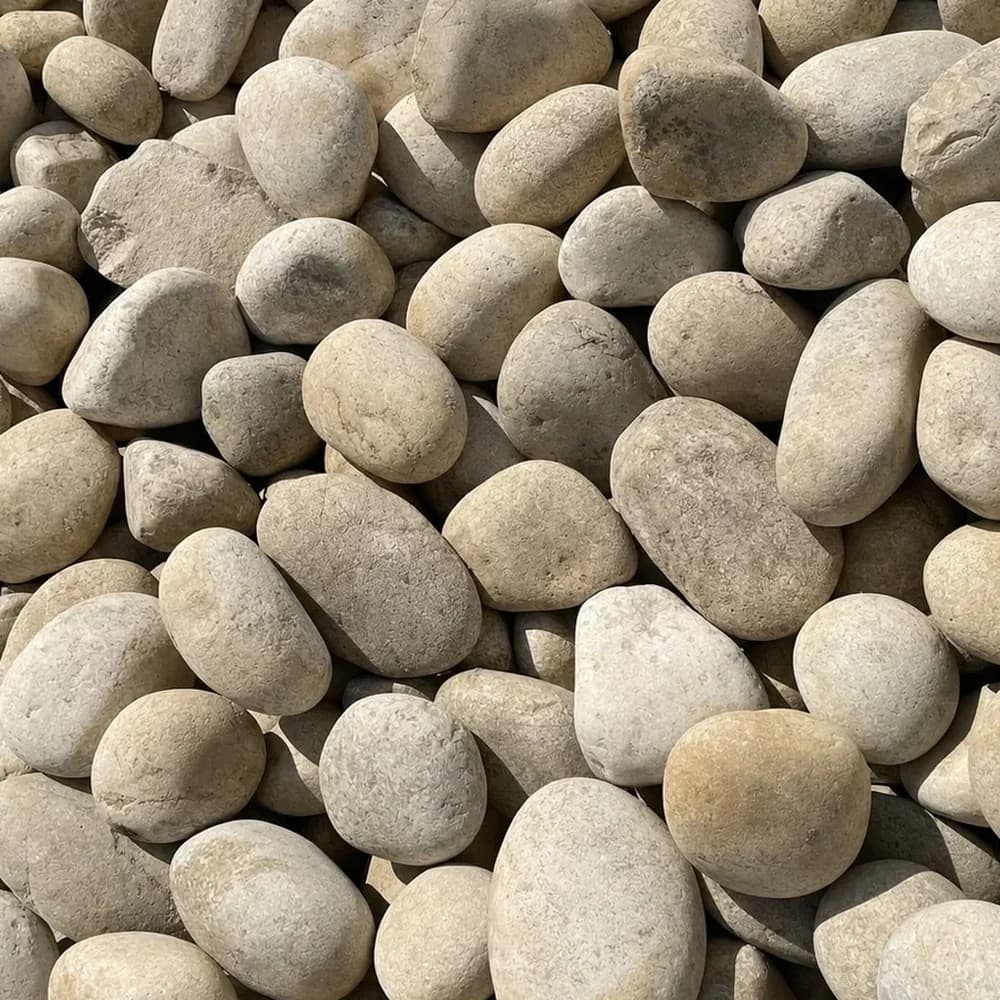
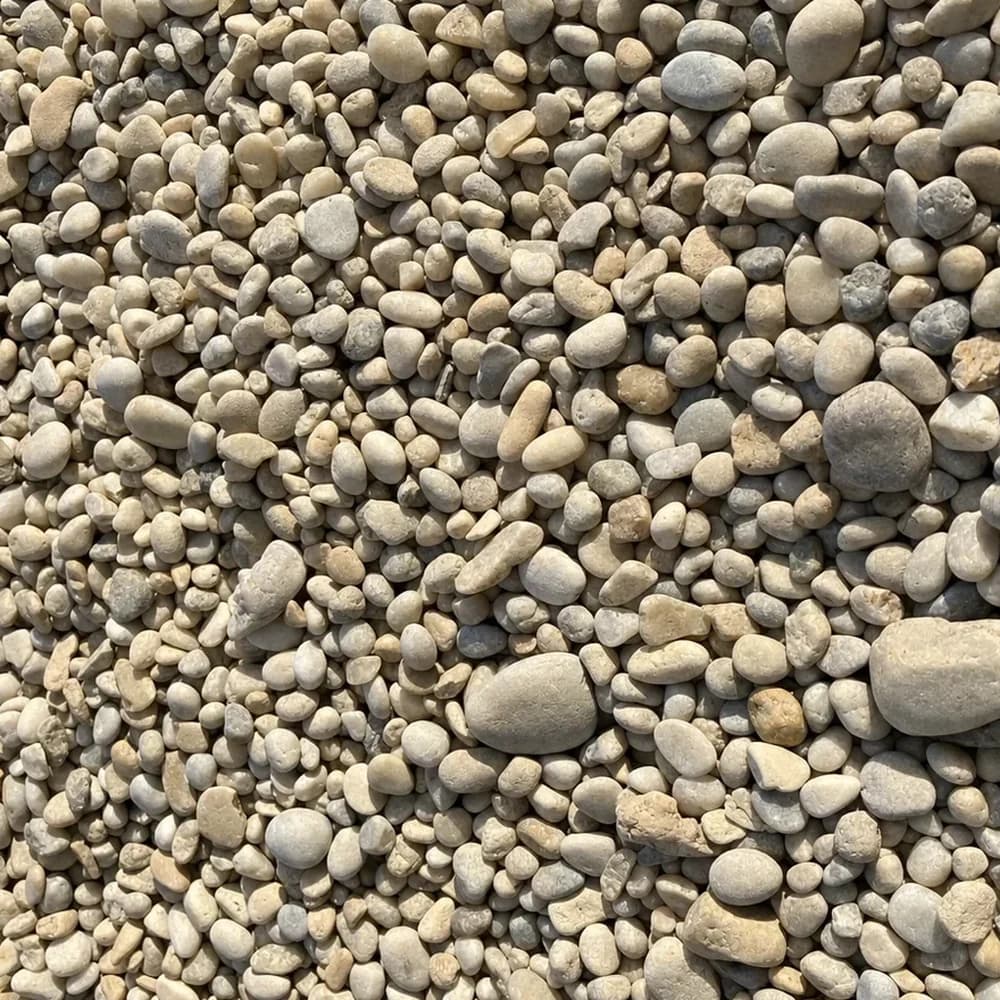
For a Tennessee hillside runoff path or planted border, River Rock settles into a naturally rounded decorative cover.
- Size: 1 inch to 3 inches
- Type: Smooth, naturally rounded stones
- Color: Tans, grays, browns and occasional reds
From $803 for 1 ton, delivery included (larger loads cost significantly less per ton)
Free delivery included
Free delivery anywhere in Tennessee
Pick a delivery date
Weekday delivery, earliest Oct 29
“Picked up River Rock from this company and the price felt fair for what I got. I'm really happy with it and would definitely order again.”
Bill D. · Verified Buyer
Get a Free Quote
Fill out the form and our sales team will get back to you within the hour.
Size and Grading
- Size
- 1 inch to 3 inches
- Type
- Smooth, naturally rounded stones
- Color
- Tans, grays, browns and occasional reds
Mulch on a slope has a short life here. One August thunderstorm puts half of a bed on the sidewalk and the rest against the downspout, and by the third year of redoing it most people go looking for something that stays where it was put. That is the job this stone gets bought for, and it does it well. What it will not do is carry a wheel, which is the other half of the story.
Why does the mulch keep ending up on the walk after a hard rain?
Because shredded mulch floats and this ground sheds water fast. Thin clay over limestone in the Central Basin takes very little rain before the rest runs off, and on a hillside lot that runoff concentrates into whatever line it can find, usually the edge of a bed or the fall from a roof.
Stone does not float. At one to three inches across, individual pieces are heavy enough that sheet flow off a roof or a lawn moves around them instead of carrying them off. Water still passes down through the gaps between the pieces, which is why the same material works as a surface over a drainage route and as a cover over a bed.
Is it the rounded stone or the crushed stone I want in a bed?
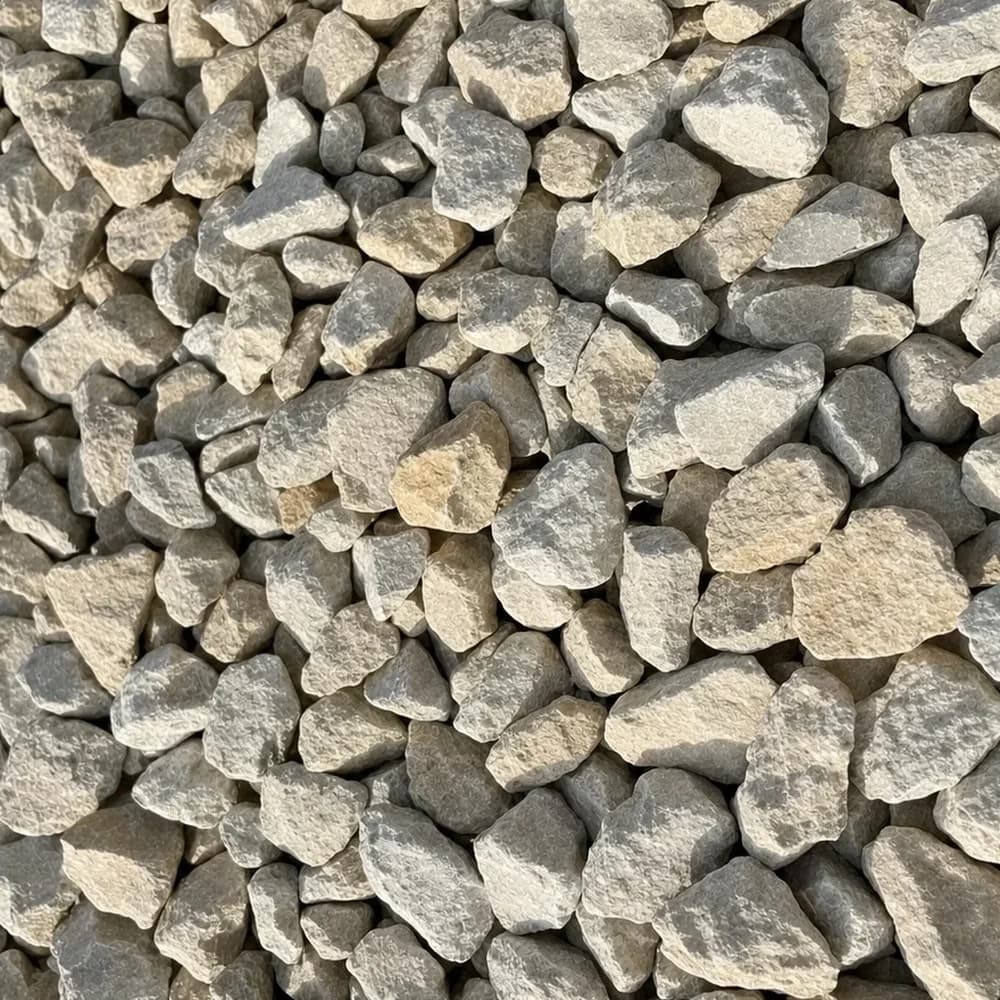
For a bed, the rounded one, and the difference is visible from the porch. These pieces are naturally rounded rather than crushed, so the surface reads as soft even though it is stone, and the color runs through tans, grays, browns and the occasional red at one to three inches across. Spread out it does not look like a construction material, which is the whole point beside a porch or along a walk.
It also does not lock together. Rounded pieces sit against one another rather than wedging, so the surface stays loose. That is exactly what you want in a bed and exactly what you do not want anywhere a load crosses.
Will rounded stone stay put on a hill lot grade?
On a gentle grade, mostly yes. On anything steep, only with help.
Three things hold a bed on a slope. Depth, because a layer one stone deep migrates and a layer two to three stones deep interlocks enough to resist. An edge at the bottom, which can be a timber, a steel or aluminum strip, a stone border or a shallow trench, so the pieces that do creep have somewhere to stop. And a route for the water, because a bed that sits across a concentrated runoff line will eventually lose the argument no matter how it is edged.
Where the flow is genuinely concentrated, such as a ditch or a culvert outlet, this is not the material. That work needs RipRap, which is heavy enough to stay put in moving water.
Can I park the boat or the RV on it?
Not on this. It is worth working the numbers anyway, because the question comes up constantly.
A pad 12 feet by 30 feet at three inches works out at 360 square feet, times 3 = 1,080, divided by 12 = 90 cubic feet, divided by 27 = 3.3 cubic yards. That is a hypothetical example and the arithmetic is fine. The problem is what happens afterwards. Rounded stone rolls under a tire instead of wedging, so the pad ruts into tracks within a season, trailer jacks sink into it, and anything with a low approach angle pushes it into ridges.
Build the pad in Crusher Run and, if you want the look, use the rounded stone as a border strip around it rather than as the surface.
Does it work for a long rural lane?
The same answer, at a scale that makes the mistake expensive.
A lane 300 feet long by 10 feet wide at four inches: 3,000 square feet, times 4 = 12,000, divided by 12 = 1,000 cubic feet, divided by 27 = 37.0 cubic yards. That is a large hypothetical order to watch migrate into the ditches. A lane needs a material with fines that compacts into a crown, and a rounded stone has neither the shape nor the binder to do it. Driveway gravel or a compacted base is the answer there.
Where this stone does belong on a rural property is the bits around the lane: the splash strip under a barn drip line, the bed at the base of a downspout, the dry creek route that takes runoff from the yard to the ditch. For a dry creek wide enough to read as a channel, mixing in large river rock along the center line gives it scale and keeps the smaller pieces from traveling.
How much does a garden path take?
Less than people expect, which is the pleasant version of this question.
A path 45 feet long by 3 feet wide at two inches: 135 square feet, times 2 = 270, divided by 12 = 22.5 cubic feet, divided by 27 = 0.83 cubic yards. Under a yard for a decent run of path, and at this site's published weight for 1 to 3 inch river rock of about 2,700 lb a cubic yard, roughly 1.35 tons, approximately 0.83 x 1.35 = 1.1 tons.
Two notes on that figure. At two inches this is a decorative surface rather than a comfortable walking one, since rounded inch-plus stone shifts underfoot and a wheelbarrow wheel drops into it. For a route people use daily, walkway gravel is the crushed, finer surface that holds a grade. And for coverage in general: one cubic yard is 27 cubic feet, so it covers about 162 square feet at two inches, 108 at three inches and 81 at four. Run your own figures through the river rock calculator to turn cubic yards into the tonnage the order form asks for.
What goes under it on cherty clay?
Fabric, usually, and a bit of shaping first.
Landscape fabric under a bed does two useful things on this ground: it keeps the cherty clay from working up into the gaps between the stones, and it slows the weeds that otherwise come through within a year. Use a woven permeable fabric rather than plastic sheet, because water has to keep moving through. Cut generous overlaps and pin them, particularly on a slope.
What fabric does not do is stop seed landing on top. Leaves and soil collect in the gaps of any stone bed, and that layer is where weeds eventually root. Blowing the bed out once or twice a year is the whole of the maintenance.
Where the bed sits over a drainage route rather than over soil, fabric goes under the stone but not between the stone and the drainage layer, since the point there is for water to reach #57 stone or a pipe below.
What do I need ready when a load of river rock arrives?
Fabric down, edging set, and the bed shaped, so the stone goes straight to its final position rather than being handled twice.
Rounded stone is heavy per wheelbarrow load and easy to spill, so a tarp under the drop spot saves a long time picking pieces out of the grass. Pick somewhere firm and as close to the work as the truck can get, and remember that a wheelbarrow full of wet stone on a slope is the part of the day you will remember. Delivery is arranged at checkout by ZIP code and the truck needs clear access to a place it can tip; the delivery notes cover how that works. Measure the beds, work the yardage, then pick a quantity and a date from Tennessee Rock Supply here. If the drop has to go behind a gate or across a lawn, raise it through the contact page first.
Quickly Calculate How Much You Need
Material: River Rock
How to Measure
Measure the length and width of your project area in feet
Decide on depth in inches (2" for landscaping, 4" for driveways)
Enter the values above and we'll calculate the tonnage you need
Need help figuring out the right amount? We can help!
Call or text us at (615) 908-6867 and we'll help you calculate the right quantity for your project.
Not sure how much you need? The River Rock Calculator has depth guides, coverage charts and worked examples for this material.
Frequently Asked Questions About River Rock
Customer Reviews
Had River Rock delivered by the team and they kept me updated the whole time, which I really appreciated.
Nate T. · Clarksville, TN · Verified Buyer
Got River Rock from the team and ordering was easy from start to finish. They kept me updated the whole time, and I'm really happy with how everything turned out.
Diane M. · Nashville, TN · Verified Buyer
Went with these guys for River Rock and they kept me updated the whole time. Price was fair too, really happy with how it all turned out.
Karen V. · Murfreesboro, TN · Verified Buyer
Needed River Rock for a backyard project, and this company made the whole thing easy. They kept me updated the whole time, and the delivery showed up right when they said it would.
Diane B. · Memphis, TN · Verified Buyer
Picked up River Rock from this company and the price felt fair for what I got. I'm really happy with it and would definitely order again.
Bill D. · Nashville, TN · Verified Buyer
River Rock has 5 verified customer reviews with an average rating of 4.8 out of 5.