#57 Stone for Tennessee Footing Drains, Turnarounds and Wet Low Spots
Also known as: 57 limestone
After #57 Stone settles into a Tennessee drainage run, its crushed form leaves room for water movement near concrete and construction work.
- Size: 3/16 inch to 1 inch
- Grading: #57
- Type: Angular crushed rock
From $403 for 1 ton, delivery included (larger loads cost significantly less per ton)
Free delivery included
Free delivery anywhere in Tennessee
Pick a delivery date
Weekday delivery, earliest Oct 29
“Ordered #57 Stone from Tennessee Rock Supply and it was a super easy process. They kept me updated the whole time and the delivery showed up right when they said it would. Really happy with how everything turned out and I'd order from them again.”
Doug N. · Verified Buyer
Get a Free Quote
Fill out the form and our sales team will get back to you within the hour.
Size and Grading
- Size
- 3/16 inch to 1 inch
- Grading
- #57
- Type
- Angular crushed rock
Most orders for this material start with a trench that stopped working. Somebody dug a drain along the uphill side of a house, filled it with whatever crushed gravel was on the yard that week, and two wet winters later the water is back against the wall. The gravel had fines in it, the fines washed into the voids, and the drain silted up from the inside. #57 stone exists to stop that happening, because there is nothing fine in it to migrate.
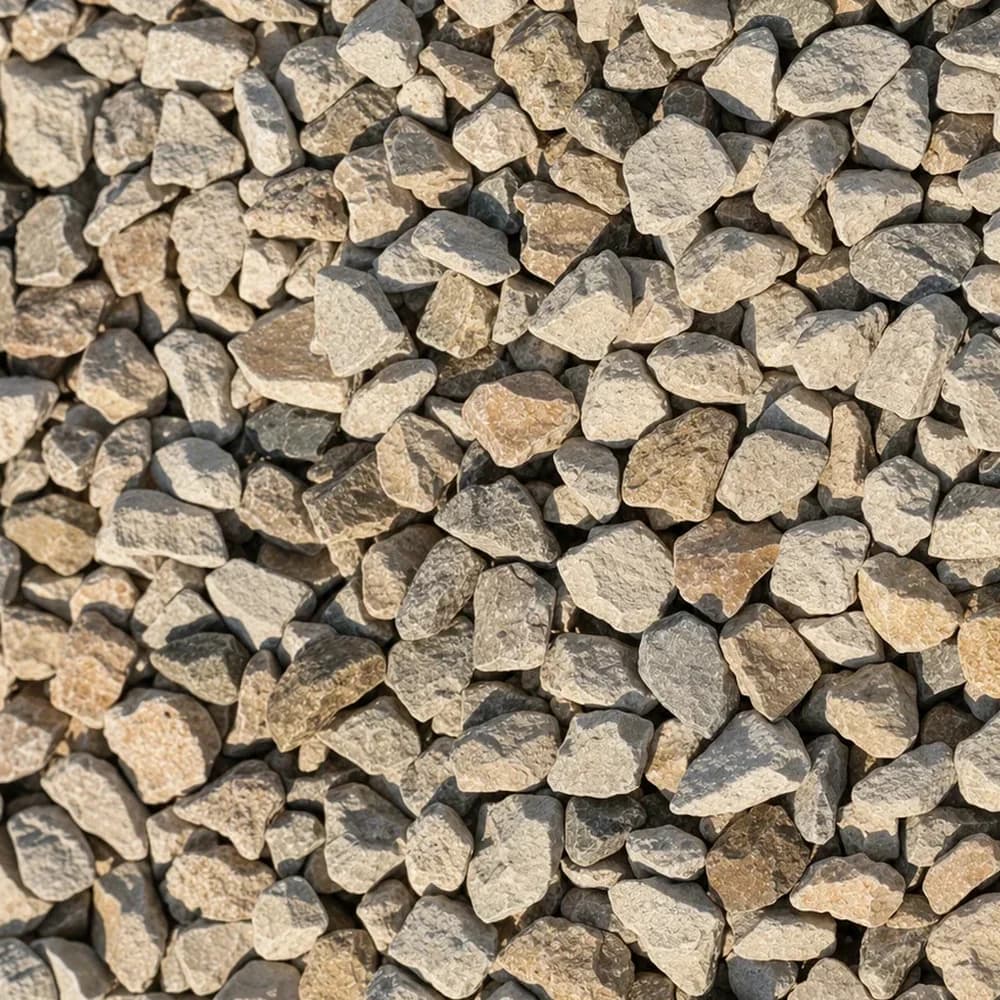
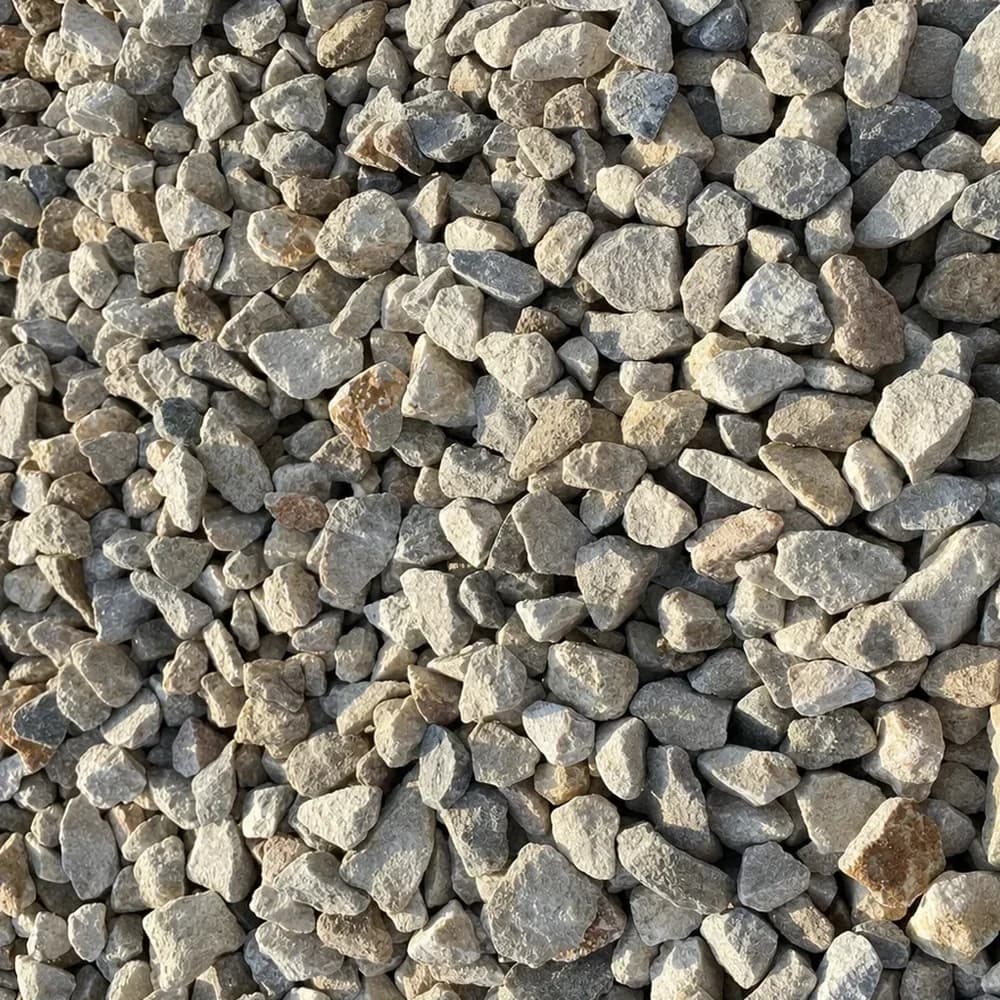
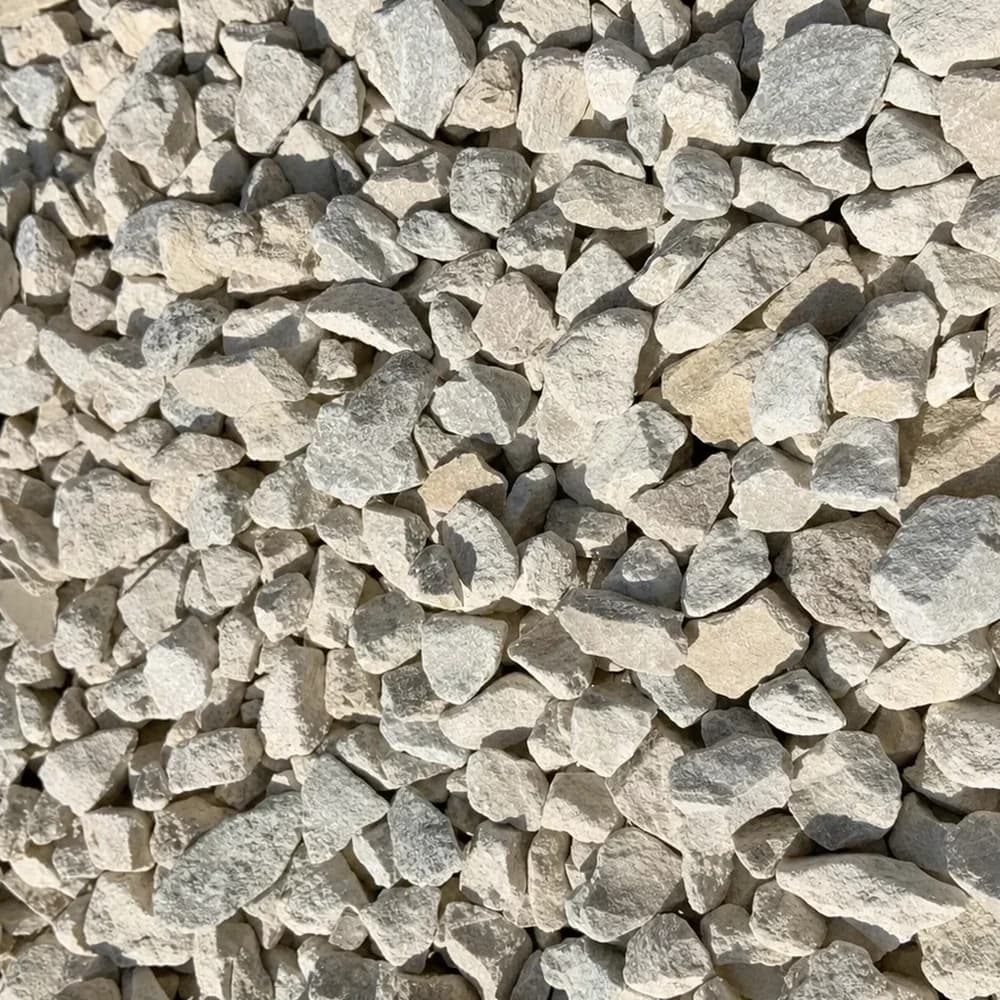
Washed faces and open gaps: what a 3/16 to 1 inch load looks like
Tip it out and the pile rattles. Every piece is angular crushed rock in a narrow band between 3/16 inch and 1 inch, and the surfaces are clean because the material has been washed. There is no dust coating your boots and no binder holding the pile together, so the sides of the pile slump into a low cone rather than standing up.
That look is the specification doing its job. In this state, washed stone is called out by size number, and No. 57 is the one that lands in that band. An engineer or an inspector writing #57 on a drawing is describing how the material is graded locally, not certifying where it came from. What matters to a buyer is that roughly a third of the finished volume is open space, and that space is connected, which is why water travels through it instead of sitting in it.
Where #57 stone earns the order on karst ground
Middle Tennessee sits on limestone that already drains fast in places and not at all in others. Thin clay over rock in the Central Basin sheds heavy rain straight across the surface. On the Highland Rim, a dense subsoil layer can hold water for days. Either way, the job of a drainage stone is to give concentrated water a route you chose rather than one it found.
Three jobs cover most of it. A footing or curtain drain along the uphill wall of a house, where the stone surrounds a perforated pipe and keeps a path open to it. A backfill zone behind a retaining wall, where the same open structure lets water out through the wall face instead of building pressure behind it. And a free-draining pad or turnaround, where the angular pieces knit together under tires firmly enough to park on while rain passes straight through.
It also goes into concrete as coarse aggregate, which is why the same stone turns up on a footing pour and in a drain on the same site.
Two hill-lot jobs where clean stone is the wrong buy
It does not pack. That is the whole of it.
A drive or a lane that has to hold a crown will not hold one in #57. The pieces interlock enough to walk and park on, but with no fines to bind them the surface stays loose underfoot, shifts under a turning wheel and rattles when you drive it. For a lane, Crusher Run is the material that locks up.
A path or a play area is the second one. Angular inch stone is uncomfortable to walk on barefoot and a wheelbarrow wheel drops into it rather than rolling over it. Walkway gravel is the finer surface for a route people use.
Planning depth around a 4 inch drain line and a parking pad
Depth is set by what the stone has to do, not by the look of it.
Around a perforated line in a footing drain, aim to get a few inches of stone under the pipe, cover it by six inches or so, and carry the fill up the trench so water can reach the stone from the soil rather than only from the top. A four inch line sits comfortably in a trench twelve to eighteen inches wide with this size around it, because the stone is small enough to pack around the pipe and large enough not to enter the perforations.
For a parking pad or turnaround, four inches over a compacted subgrade is a working figure and six inches is sensible where a trailer sits. The depth you enter is the finished depth. Washed stone settles very little between spreading and use, unlike a material with fines in it, so what you rake out is close to what you end up with. What it does do is migrate sideways under traffic, which is why a pad needs an edge.
Where the ground underneath is soft clay, put a separation fabric between the soil and the stone. Without it the clay works upward into the voids under load and the layer that was drawing water becomes a layer that is holding it.
Yards for a turnaround, a foundation drain and a low corner of the yard
Three hypothetical examples, worked the way the site calculator does it: length times width times depth in inches, divided by twelve, divided by twenty seven.
A gravel turnaround 26 feet by 18 feet at four inches. 26 x 18 = 468 square feet. 468 x 4 = 1,872, divided by 12 = 156 cubic feet. Divided by 27 = 5.8 cubic yards. At this site's published weight for #57 stone, about 2,800 lb a cubic yard or roughly 1.4 tons, that turnaround works out at approximately 5.8 x 1.4 = 8.1 tons.
A footing drain 60 feet long, trenched 18 inches wide, with stone 18 inches deep. 60 x 1.5 = 90 square feet. 90 x 18 = 1,620, divided by 12 = 135 cubic feet. Divided by 27 = 5.0 cubic yards.
A low corner of a yard 16 feet by 10 feet, filled six inches deep as a soak area. 160 square feet. 160 x 6 = 960, divided by 12 = 80 cubic feet. Divided by 27 = 3.0 cubic yards.
Those are cubic yards of stone in place. To get the tonnage the order form asks for, put the same numbers through the stone calculator, which handles the weight conversion and lets you add a little extra for the trench walls that always take more than the drawing said.
Picking between the washed sizes when the trench is narrow
The catalogue carries several washed sizes and they are not interchangeable.
#67 stone sits just below this one and is the choice where the trench is tight or the stone has to work around a smaller pipe. The 3/8 inch crushed stone is finer again and suits pipe bedding and shallow drainage where inch stone would be clumsy. Going the other way, drain rock is the one to look at for heavy French drain work and runs behind a wall.
For concrete, the pour has its own aggregate requirement, so check the mix design before ordering rather than assuming one size covers both jobs on the site.
What the truck needs before a stone load lands
Washed stone is easier to handle than most things on this list. It moves with a shovel, it does not stick to the wheelbarrow, and it can sit in a pile through a rain event without going anywhere. What it will not do is stay where you put it on a slope, so if the drop spot is on a grade, plan for a board or a bucket to check it.
Delivery is arranged at checkout by ZIP code, and the truck needs clean access to somewhere it can tip. Read how the drop gets arranged before you pick a date if the lane in is tight. Then measure the trench or the pad, run the arithmetic, and set quantity and date on this page. If the drain crosses a property line, a ditch or a culvert and you want to talk it through first, use the contact page.
Quickly Calculate How Much You Need
Material: #57 Stone
How to Measure
Measure the length and width of your project area in feet
Decide on depth in inches (2" for landscaping, 4" for driveways)
Enter the values above and we'll calculate the tonnage you need
Need help figuring out the right amount? We can help!
Call or text us at (615) 908-6867 and we'll help you calculate the right quantity for your project.
Not sure how much you need? The Stone Calculator has depth guides, coverage charts and worked examples for this material.
Frequently Asked Questions About #57 Stone
Customer Reviews
Ordered #57 Stone from them and the driver was friendly, plus really careful about where he dropped it.
Tara M. · Clarksville, TN · Verified Buyer
Delivery showed up on the day they promised, really happy with the whole thing.
Lisa T. · Memphis, TN · Verified Buyer
Ordered #57 Stone from Tennessee Rock Supply and it was a super easy process. They kept me updated the whole time and the delivery showed up right when they said it would. Really happy with how everything turned out and I'd order from them again.
Doug N. · Chattanooga, TN · Verified Buyer
Had these guys bring out #57 Stone for a driveway project and everything went smooth. Delivery arrived right on schedule, which made the whole day easier. I'm really happy with how it turned out and I'd definitely order from them again.
Steve R. · Murfreesboro, TN · Verified Buyer
Needed #57 Stone and this company made ordering painless, it was exactly what I needed.
Scott T. · Murfreesboro, TN · Verified Buyer
#57 Stone has 5 verified customer reviews with an average rating of 4.8 out of 5.