3/8" Natural Pea Gravel for Tennessee Yards, Runs and Patios
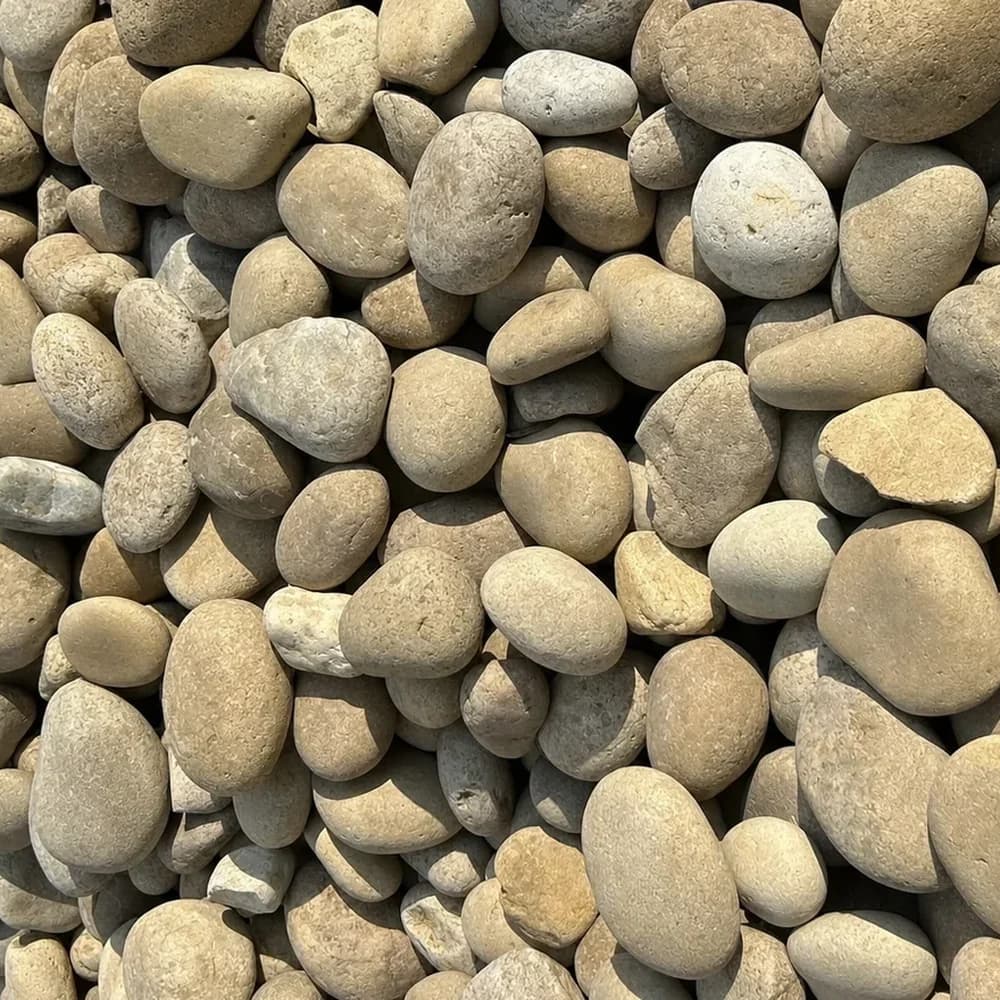
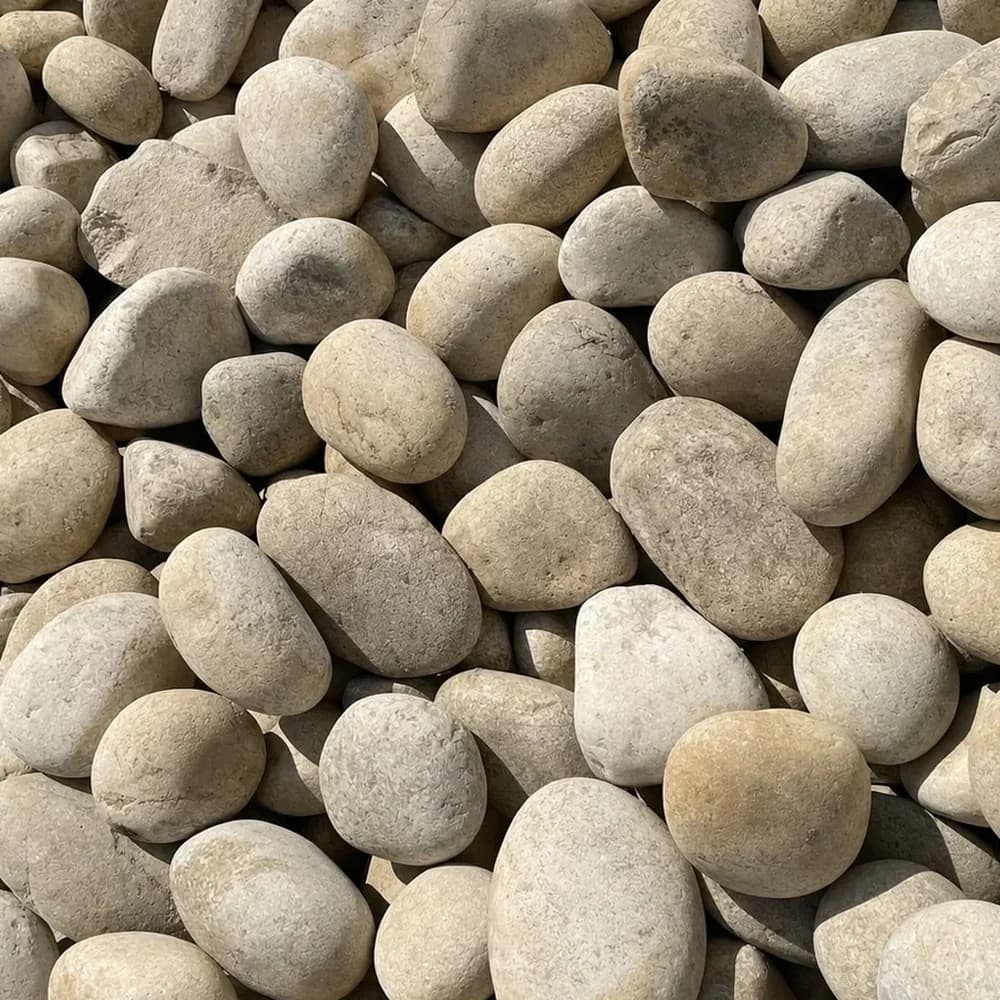
For Tennessee landscape work, 3/8" Natural Pea Gravel works as a smooth finish where foot traffic and surface drainage are both part of the plan.
- Size: Approximately 3/8 inch
- Type: Small, smooth, naturally rounded stones
- Color: Tans, creams, grays, browns and occasional reds
From $666 for 1 ton, delivery included (larger loads cost significantly less per ton)
Free delivery included
Free delivery anywhere in Tennessee
Pick a delivery date
Weekday delivery, earliest Oct 29
“Got natural pea gravel from these guys, fair price, showed up looking great, and I'd definitely order again.”
Susan M. · Verified Buyer
Get a Free Quote
Fill out the form and our sales team will get back to you within the hour.
Size and Grading
- Size
- Approximately 3/8 inch
- Type
- Small, smooth, naturally rounded stones
- Color
- Tans, creams, grays, browns and occasional reds
The ground most of these jobs sit on is a slope with clay under it, and that is the fact that decides whether a pea gravel area works or turns into a chore. 3/8" Natural Pea Gravel is rounded river-worn stone in tans, creams, grays and browns with the occasional red through it, small enough to be comfortable under bare feet and smooth enough that nothing holds it in place except whatever you build around it. On level, contained ground it is one of the easiest surfaces to live with. On an open grade it goes downhill.
Late summer and early fall, when the clay is firm enough to shape
There is a window in this state when this work is genuinely easy, and it is not the one most people pick.
By late summer the clay has dried enough to cut a clean edge in, hold a shaped subgrade and take a compactor without pumping. Autumn keeps that going, with cooler working weather and time for the finished area to settle before winter rain arrives. It is the sensible time to do the digging, because excavating to a consistent depth in dry clay is a different task from doing it in wet clay.
Why a wet spring is the hard time to build one
Winter and spring are the wettest stretch here, and a saturated clay subgrade causes two problems.
The first is that you cannot compact it. Working wet clay churns it, and rounded stone laid over churned clay settles into it in patches over the following months, so the surface goes uneven and the gravel and the soil end up mixed.
The second is timing against storms. Heavy rain on a newly laid, unedged area moves rounded stone immediately, particularly on the erodible silt out west and on any cut slope. If the job has to happen in spring, get the edging and the drainage in first and lay the stone last.
Edging, fabric and fall: what happens before delivery day
A pea gravel area is mostly preparation, and the stone is the quick part at the end.
- Excavate to a consistent depth, taking out sod and topsoil so nothing under the area can rot and settle.
- Shape the bottom with a slight fall to a point where water can leave, rather than leveling it flat and trapping the water.
- Compact the subgrade, and lay woven permeable fabric on clay so soil and stone stay separate.
- Put in a compacted base course where the area carries weight. For a dog run or a bare strip the compacted subgrade is usually enough; for anything loaded, Crusher Run goes under the stone first.
- Set the edging before the gravel arrives. Steel, timber, a brick course or a cut trench all work, and the edge has to stand proud of the finished stone level.
Without a raised edge, rounded stone will find its way into the lawn no matter how carefully you spread it.
A hot tub pad, a side-yard dog run and the strip where grass gave up
Three jobs cover most of what this material gets ordered for on a hill lot.
A hot tub needs rigid, level support: a slab or a properly built compacted base, because a filled tub is heavy and unforgiving of settlement. The pea gravel goes around it as the apron, where it takes splash-out and drains it away instead of leaving a permanent wet patch.
A side-yard dog run is where the material earns its place. It drains fast after a storm, it does not hold mud, it rinses off with a hose and it is soft enough underfoot for an animal on it every day.
The strip beside a drive or along a north-facing wall where grass has never taken is the third. Two inches of rounded stone over fabric turns an annual mud patch into something that stays looking finished.
Why three inches of 3/8" natural pea gravel walks worse than two
Depth is the thing people get wrong, and deeper is not better with a rounded stone.
Two inches over a prepared, compacted base is the working depth for a surface people walk on. At that depth a foot bears on what is underneath and the stone stays put around it. At three or four inches the layer moves as a body under a footstep, which is the sinking, shifting feeling people complain about, and it is why a wheelbarrow wheel plows a trench through a deep bed. Go deeper only where the material is not walked on: a drainage bed, a downspout run or a decorative area takes three inches happily.
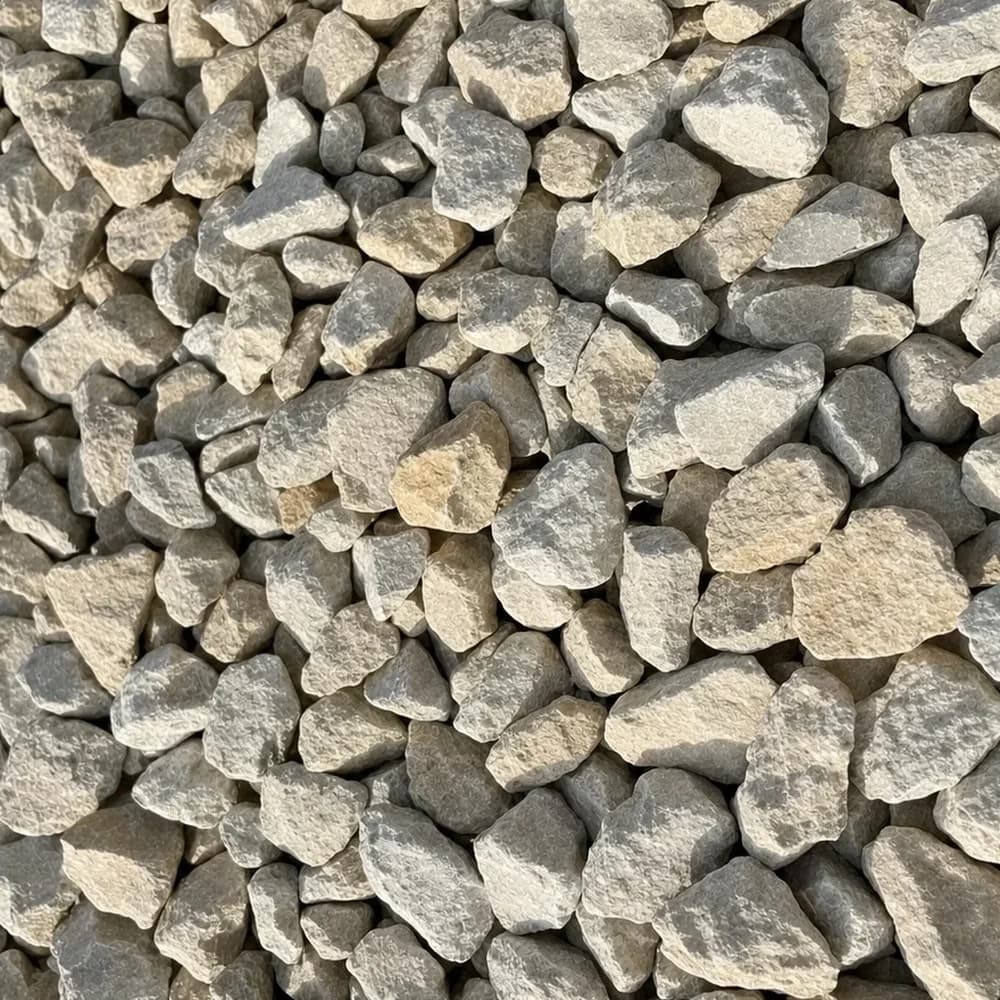
For a route people use every day with a wheelbarrow or a cart, a crushed material such as Walkway Gravel is the better buy, because crushed pieces interlock and rounded pieces cannot.
Tons for the pad apron, the run and the drive-side strip
Three hypothetical examples, worked as this site's calculator works: length times width times depth in inches, divided by twelve, divided by twenty seven, then multiplied by weight. Pea gravel runs about 2,800 lb per cubic yard on this site's published figures, near enough 1.4 tons per cubic yard.
An apron around a hot tub, 8 feet by 8 feet at three inches. 64 square feet. 64 x 3 = 192, divided by 12 = 16 cubic feet. Divided by 27 = 0.6 cubic yards, about 0.8 tons.
A side-yard dog run 40 feet by 6 feet at two and a half inches. 240 square feet. 240 x 2.5 = 600, divided by 12 = 50 cubic feet. Divided by 27 = 1.9 cubic yards, about 2.6 tons.
A strip beside a drive where grass has failed, 55 feet by 2 feet at two inches. 110 square feet. 110 x 2 = 220, divided by 12 = 18.3 cubic feet. Divided by 27 = 0.7 cubic yards, about 1 ton.
Check your own area in the pea gravel calculator for the tonnage.
Mower blades, bare feet and the stones that escape
Upkeep is light and it is not nothing.
Stones that reach the lawn find a mower blade, which is loud, hazardous and hard on the machine, so the boundary is where the attention goes. A raised edge, a finished stone level an inch below the top of it and a mowing strip along the line will hold almost all of it.
Beyond that, a rinse with the hose brings the color back, leaves come off with a blower rather than a rake, which pulls stone with it, and most areas want a light top-up every few years as material works down into the base. On a grade, rake the drift back up after a heavy storm season before it leaves a bare patch at the top.
Ordering to land the week the edging is in
The sequence that works is preparation first, delivery second, and that is worth planning because rounded stone tipped on a drive does not stay in a tidy pile. Have the excavation shaped, the fabric down and the edging fixed before the load arrives, then spread it in one go. Put the drop on a hard flat surface over a tarp and keep it off any slope, because a pile of round stone on a grade migrates on its own. Delivery is arranged at checkout by ZIP code and the truck needs clear access to somewhere it can tip, which the delivery page explains. Measure the area, work the tons, then set a quantity and a date here. For a back garden with no vehicle route, describe the access through contact before ordering.
Quickly Calculate How Much You Need
Material: 3/8" Natural Pea Gravel
How to Measure
Measure the length and width of your project area in feet
Decide on depth in inches (2" for landscaping, 4" for driveways)
Enter the values above and we'll calculate the tonnage you need
Need help figuring out the right amount? We can help!
Call or text us at (615) 908-6867 and we'll help you calculate the right quantity for your project.
Not sure how much you need? The Pea Gravel Calculator has depth guides, coverage charts and worked examples for this material.
Frequently Asked Questions About 3/8" Natural Pea Gravel
Customer Reviews
Ordered natural pea gravel from this company and it showed up right when they said it would. They kept me updated the whole time, and I'm really happy with how easy it all was.
Paul J. · Chattanooga, TN · Verified Buyer
Got natural pea gravel from these guys, fair price, showed up looking great, and I'd definitely order again.
Susan M. · Chattanooga, TN · Verified Buyer
Got natural pea gravel from these guys and it was spot on. Delivery came exactly when expected, really happy with the whole thing.
Jennifer K. · Nashville, TN · Verified Buyer
Needed natural pea gravel for my walkway and the team made it super easy, free delivery showed up right on time and it looks great.
Maria H. · Memphis, TN · Verified Buyer
Ordered natural pea gravel from these guys and it was super easy. Delivery got here on time, and the driver put it right where I needed it. Really happy with how it all turned out.
Susan P. · Franklin, TN · Verified Buyer
3/8" Natural Pea Gravel has 5 verified customer reviews with an average rating of 5 out of 5.
3/8" Natural Pea Gravel delivery across Tennessee
- Nashville
- Memphis
- Knoxville
- Chattanooga
- Clarksville
- Murfreesboro
- Franklin
- Johnson City
- Jackson
- Hendersonville
- Smyrna
- Spring Hill