Fill Dirt for Tennessee Low Ground, Backfill and Grade Work
Fill Dirt helps Tennessee property owners build up low ground and backfill excavations before lawn, drainage, or construction work.
- Size: Screened to remove large rocks, roots and debris
- Grading: Minimal organic matter
From $257 for 1 ton, delivery included (larger loads cost significantly less per ton)
Free delivery included
Free delivery anywhere in Tennessee
Pick a delivery date
Weekday delivery, earliest Oct 29
“Went with the team for fill dirt, and they made the whole delivery easy. They kept me updated the whole time, and I'm really happy with how it all turned out.”
Paul K. · Verified Buyer
Get a Free Quote
Fill out the form and our sales team will get back to you within the hour.
Size and Grading
- Size
- Screened to remove large rocks, roots and debris
- Grading
- Minimal organic matter
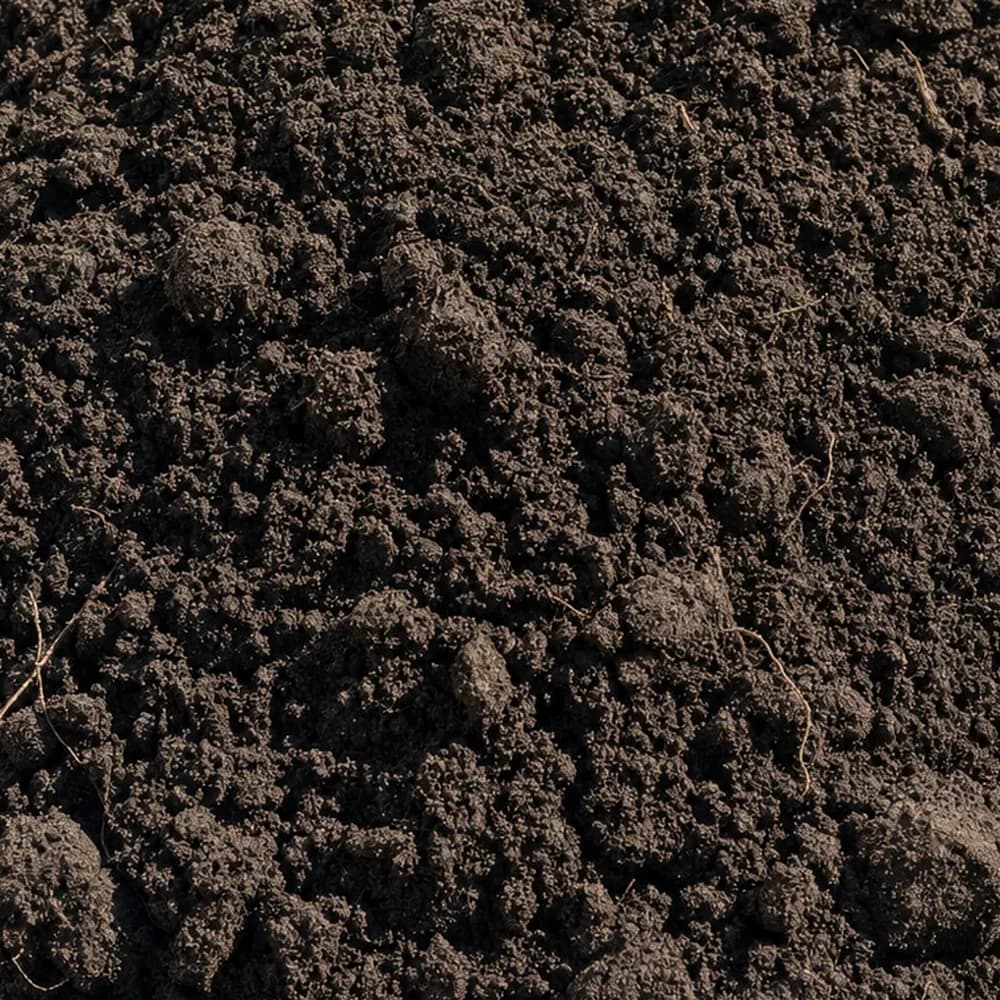
The usual version of this job starts with the wrong material. A soggy corner gets filled with something dark and crumbly bought by the yard, it looks right for a month, then it settles, holds water and grows weeds. Fill dirt exists for the other half of that job: it is screened earth with the large rocks, roots and debris taken out and very little organic matter in it, which is exactly what you want where earth has to stay put rather than break down.
Choose fill dirt when the job is volume below the surface
Four situations make it the right order.
Ground that has to come up by more than a couple of inches, whether that is a low corner of a yard or a pad being built out of a slope. Backfill around a foundation, a wall footing or a culvert, where settlement later is the thing to avoid. Voids left by a removed stump, tank or old structure. And any grade that is being reshaped before something gets built on it.
The common thread is that nothing has to grow in it and nothing looks at it. It is the bulk underneath.
Skip it where things grow, and where the ground keeps opening up
Two hard limits. The first is planting. Minimal organic matter is a feature underground and a problem at the surface, so grass and beds want Top Soil or, in a frame, Garden Soil over the fill rather than fill on its own.
The second is specific to limestone country. Across the Central Basin and the eastern valleys, a depression that keeps reopening after it has been filled, or one that appeared without anything being dug, may be the ground itself taking water underground. That is not a fill job and adding tons of earth can make it worse. Get it looked at before you order anything.
Grade work, backfill and voids on a hilly lot
On rolling ground, most fill goes into building a flat out of a slope: a barn pad, a shed site, a turnaround cut into a hillside. The fill builds the low side up to the level of the cut, and the finished shape is what decides where water goes for the next twenty years, so shape it deliberately and drain it away from anything built.
Backfill is the other big use. Around footings and walls it goes in around the drainage detail rather than instead of it, so the stone in the trench stays a water path and the earth outside it stops the trench being a bathtub.
Fill below, growing medium above: where the line sits
This is the decision the whole page turns on. Build to within a working depth of the finished level in fill, compact it, and then place the surface material on top.
For lawn, that surface layer is four to six inches of screened topsoil, which is enough for grass roots without being a loose sponge. For a planting bed, more. For a patio or a pad, the surface layer is not soil at all but a compacted stone base, and the fill simply brings the subgrade up so the base can be a sensible thickness instead of a foot of stone.
Raising a patio subgrade and shaping a site entrance
Two hypothetical examples. The method is length by width by depth in inches, divided by 12, divided by 27. This site publishes fill dirt at about 2,400 lb per cubic yard dry, roughly 1.2 tons to the yard, and up to 3,000 lb per yard wet, roughly 1.5 tons, so a load after a wet week weighs noticeably more than the same volume in September.
A patio area 16 feet by 12 feet sitting eight inches low is 192 square feet. 192 x 8 = 1,536, divided by 12 = 128 cubic feet, divided by 27 = 4.7 cubic yards, about 5.7 tons dry. The stone base and the setting course above it are separate orders, and the patio itself is built on Dense Grade Base, not on the fill.
A site entrance approach 60 feet by 14 feet, brought up an average of six inches before the stone goes down, is 840 square feet. 840 x 6 = 5,040, divided by 12 = 420 cubic feet, divided by 27 = 15.6 cubic yards, about 18.7 tons. The running surface on top of that is #4 Crushed Stone over fabric. Check your own figures on the dirt calculator.
A dry creek bed is a third case where earth does the shaping and stone does the work: fill builds the banks and the spoil berm that define the channel, then the channel itself is lined with RipRap at the inlet and outlet and River Rock through the middle.
Lifts, compaction and the first wet winter
Fill placed in one deep dump settles for years. Placed in lifts of six to eight inches and compacted as it goes, it settles in weeks. That is the entire difference between a grade that holds and a dip that comes back.
A plate compactor handles small work. A pad of any size wants a roller or the bucket of whatever machine is on site. Expect some settlement regardless over the first wet winter, which is why grade work is better done a season ahead of anything being built or seeded on it, and why it is worth leaving a slight crown rather than a dead flat finish. Measure, run the tonnage, then set a quantity and a delivery date here with Tennessee Rock Supply, or raise access on the contact page if a machine has to get in behind the drop.
Quickly Calculate How Much You Need
Material: Fill Dirt
How to Measure
Measure the length and width of your project area in feet
Decide on depth in inches (2" for landscaping, 4" for driveways)
Enter the values above and we'll calculate the tonnage you need
Need help figuring out the right amount? We can help!
Call or text us at (615) 908-6867 and we'll help you calculate the right quantity for your project.
Not sure how much you need? The Dirt Calculator has depth guides, coverage charts and worked examples for this material.
Frequently Asked Questions About Fill Dirt
Customer Reviews
Got fill dirt from this company and everything went smooth. The driver was friendly and careful about where he placed it, which I really appreciated.
Jeff T. · Clarksville, TN · Verified Buyer
Needed fill dirt for a low spot in my yard, and Tennessee Rock Supply made it super easy. The fill dirt was top notch, and I'm really happy with how it all turned out.
Kelly G. · Murfreesboro, TN · Verified Buyer
Grabbed fill dirt from these guys and ordering was quick and easy. I'd definitely order again and recommend them to anyone needing fill dirt.
Tara K. · Memphis, TN · Verified Buyer
Went with the team for fill dirt, and they made the whole delivery easy. They kept me updated the whole time, and I'm really happy with how it all turned out.
Paul K. · Chattanooga, TN · Verified Buyer
Easy to grade
I used it to bring up a low area before reseeding. It spread evenly and gave me a solid surface to grade. I was pleased with how well it fit the project at my home in Chattanooga, TN.
Logan H. · Clarksville, TN · Verified Buyer
Fill Dirt has 5 verified customer reviews with an average rating of 5 out of 5.