Fill Dirt Calculator for Low Spots, Trenches and Sunken Ground
Enter your project dimensions
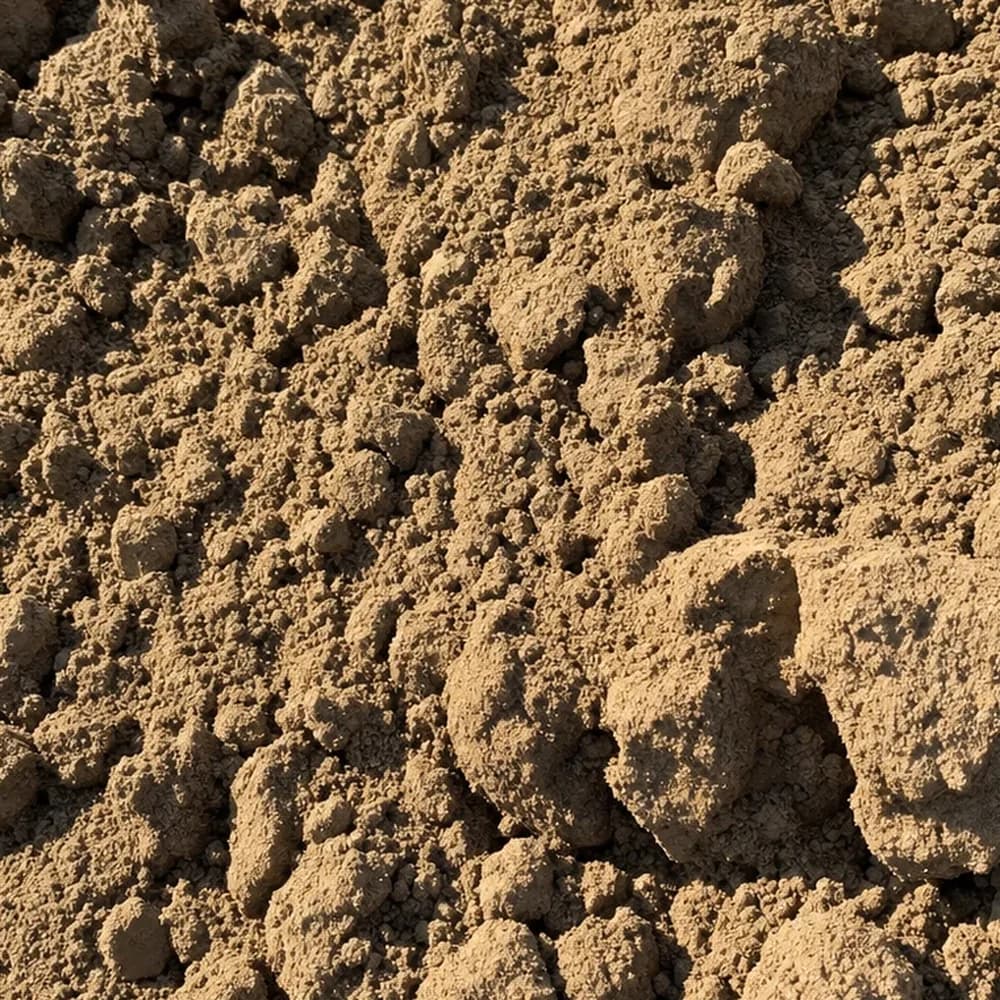
The correction this page makes most often is a material one. Somebody measures a sunken corner of the lawn, works out four yards, orders four yards of fill, spreads it, seeds it, and spends the next two summers wondering why the grass over that patch is thin and yellow while the rest of the yard is fine. Fill dirt is screened subsoil with the organic matter taken out of it, which is exactly why it holds a grade and exactly why nothing grows well in it. Get the quantity right here, then hand the top few inches to a different material.
How do I measure a low spot that is deeper in the middle than at the edges?
Almost nothing that needs fill has a flat bottom. A settled depression dishes, a wheel rut tapers, an old stump hole has a shoulder around it.
Measure the length and width across the whole area at ground level, then take the depth in at least three places: the deepest point, a spot part way out, and the shallow edge. Use the middle of that spread rather than the deepest reading. On a dish that runs eight inches at the center and feathers to nothing at the rim, four inches is the honest average.
Say that dish is 24 feet by 18 feet. That is 432 square feet. 432 x 4 ÷ 12 = 144 cubic feet, and 144 ÷ 27 = 5.33 cubic yards. At the dry weight of about 2,400 lb a cubic yard, or 1.20 tons, that is 6.4 tons.
Is the ground settling, or is it taking water underground?
This is worth two minutes before you order anything. Across the Central Basin and the Highland Rim, and in the limestone valleys of East Tennessee, the rock below the clay has openings in it and surface water finds them.
A hole that appeared once and has stayed the same size since is usually settlement over an old stump, a filled trench or a demolished footing. Fill is the right answer. A dip that is visibly deeper after every heavy storm, or one that drinks a hose without ever standing water, is behaving differently and yard dirt will keep disappearing into it. That is ground to have looked at rather than ground to buy fill for. Leave it out of the measurement and calculate the rest of the yard.
Which numbers go in when the hole is a trench or a hole deeper than two feet?
Trenches are the easy case. Length in feet, width in feet, and the depth of the void in inches. A utility trench 60 feet long and 2 feet wide is 120 square feet, and at 18 inches deep that is 120 x 18 ÷ 12 = 180 cubic feet, or 6.67 cubic yards, which is 8.0 tons.
The tool takes Rectangle, Circle and Multiple areas, with length, width and diameter all in feet and up to five areas totaled in one estimate. The catch on this page is the depth field: it accepts 0.25 to 24 inches and no more, which is shallower than plenty of holes.
Split anything deeper into layers and add them. A stump hole five feet across and three feet deep is a circle at 18 inches, run twice. Area is 0.7854 x 5 x 5 = 19.6 square feet. 19.6 x 18 ÷ 12 = 29.4 cubic feet a pass, so 58.8 cubic feet for both, which is 2.18 cubic yards, or 2.6 tons. That matches how you would backfill it anyway, in lifts rather than in one drop.
Does a wet week change what I should order?
It changes what arrives, not what you order. Dry fill dirt runs about 2,400 lb a cubic yard. Saturated, the same yard can reach 3,000 lb, which is 1.50 tons rather than 1.20.
| Fill dirt | Weight per cubic yard | Tons per yard |
|---|---|---|
| Dry | about 2,400 lb | 1.20 |
| Wet | up to 3,000 lb | 1.50 |
| Screened topsoil, for comparison | about 2,200 lb | 1.10 |
The volume is the same either way, so the yardage on your order does not move. What moves is the wheelbarrow. Wet clay-heavy fill smears instead of compacting and it will take you twice as long to shift, which matters here because the wet stretch runs from about December through April and saturated ground delays this kind of work far more often than frost does. Watch a dry window and take it.
Should I keep the extra percentage on a fill order?
Yes, and for a reason that is not spillage. Loose fill loses height as it settles, so the surface you hand over on Sunday is not the surface you have after the first hard rain.
The tick box on the form adds ten percent for compaction and spillage and is on by default. On a lawn repair that is about right if you also leave the finished level a half inch proud of the surrounding grass and let it come down to match. On anything that will carry weight, the extra percentage is not the mechanism that saves you: place the fill in lifts of six to eight inches, compact or soak each one, and let the compaction do the work. Fill under a slab or a footing is a different job again and wants a compaction spec from an engineer rather than a tick box.
Keep wood, sod and root balls out of the fill. Buried timber rots over a few years and leaves you a fresh hollow in the same spot.
Three materials, three tools: fill to grade, topsoil for lawn, garden soil for beds
Three materials, three tools, and the split is by what the layer has to do.
Fill dirt builds grade. Bring it up to within four to six inches of your finished level and stop there, whatever the calculator says the full depth needs.
Screened topsoil is the growing layer over the top, and it has its own topsoil calculator because it weighs less, about 2,200 lb a yard. Garden soil is the blended material for raised beds and planting rows, lighter again at about 2,000 lb, and it is sized with the soil calculator.
Take the trench above. If grass goes back over it, order fill for 12 inches rather than 18: 120 x 12 ÷ 12 = 120 cubic feet, 4.44 cubic yards, 5.3 tons. Then order topsoil for the last 6 inches: 120 x 6 ÷ 12 = 60 cubic feet, 2.22 cubic yards, 2.4 tons. Two lines on the order, one trench, and grass that establishes.
When the numbers are settled, choose a quantity and a date on the fill dirt product page. Delivery is arranged at checkout by ZIP code.
Common questions
Where should the truck put six yards of fill on a sloped lot?
Somewhere firm, level enough that the bed can lift, and uphill of the work if you have the choice, so the wheelbarrow runs go down rather than up. Fill dirt is the messiest material on the site to drop on a drive, so put a tarp down first if the surface matters to you. Keep the pile off the lawn: a week under a heap of wet subsoil kills grass in a neat rectangle.
The result shows yards and tons. Which figure am I ordering against?
The yards. Fill dirt and the soils on this site are sold by volume, so cubic yards is the line that matches the product page. Tons is still useful, because it tells you what is coming down the drive: six yards of dry fill is over seven tons, and wet it is closer to nine.
Should I enter the depth of the hole or the depth after it is packed down?
Enter the void you measured. The hole is the hole. What packing changes is the finished surface, which is why fill goes in lifts and why a lawn repair is left slightly high to settle flush. Compacting a layer does not reduce how much material the space needed in the first place.
My hole is round, not square. What goes in the diameter field?
The width across the widest point, in feet, using Circle mode. For an oval or a kidney-shaped depression, measure the long way and the short way and average them. A pit that runs 9 feet by 7 gives a diameter of 8, so 0.7854 x 8 x 8 = 50 square feet, and at 6 inches that is 25 cubic feet, or 0.93 cubic yards.
How do I sanity check the number before I order?
Square feet, times depth in inches, divided by 12, gives cubic feet. Divide by 27 for cubic yards, and multiply by 1.2 for tons of dry fill. A 20 by 20 area raised 4 inches: 400 square feet, 400 x 4 ÷ 12 = 133 cubic feet, ÷ 27 = 4.9 yards, x 1.2 = 5.9 tons.
Related calculators
Cheap by the yard, free to your gate.
Screened fill dirt for grading and backfill, delivered across Tennessee.