Top Soil for Tennessee Ground the Grading Left Behind
Tennessee ground over limestone or shallow ridge rock needs a planned finish layer. Top Soil readies prepared lawn and garden areas for planting.
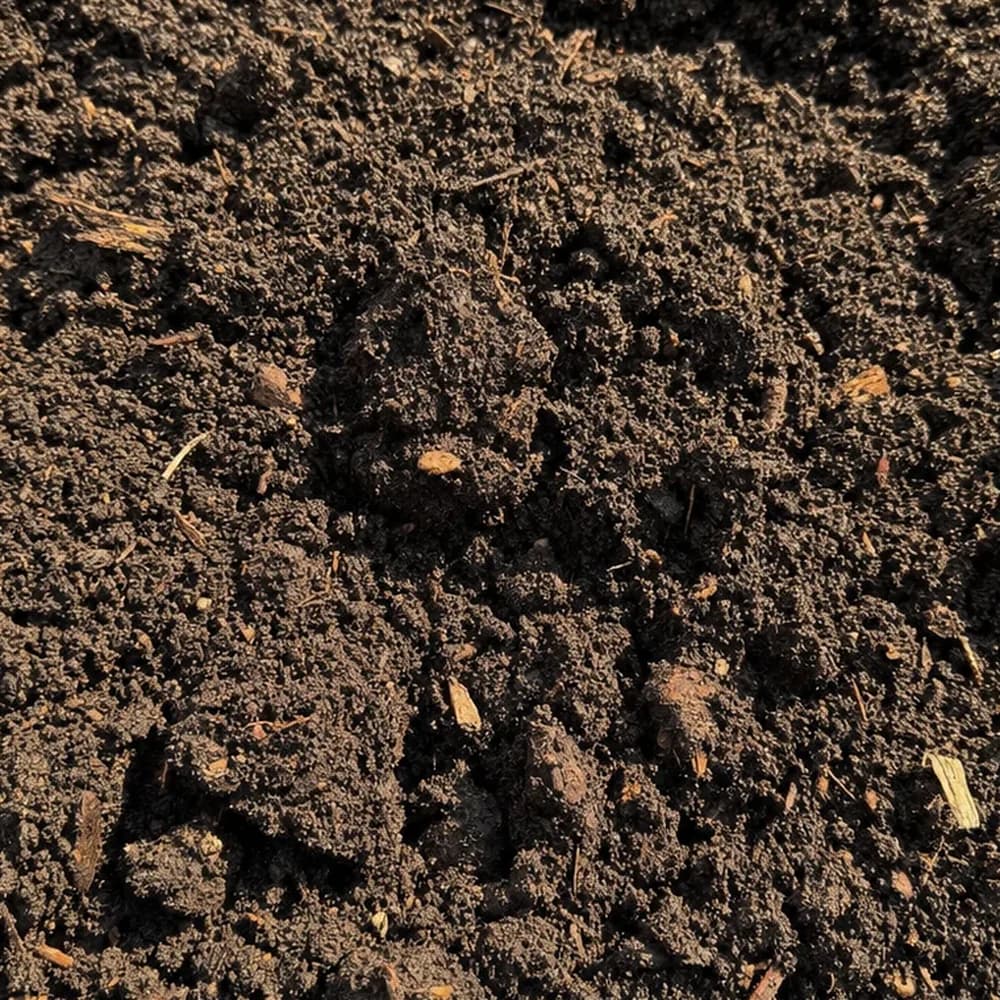
- Size: Screened; free of rocks, debris and large clumps
- Grading: Balanced sand, silt and clay
From $389 for 1 ton, delivery included (larger loads cost significantly less per ton)
Free delivery included
Free delivery anywhere in Tennessee
Pick a delivery date
Weekday delivery, earliest Oct 29
“Grabbed top soil from this company and it was top notch, plus the free delivery made it even better.”
Bill E. · Verified Buyer
Get a Free Quote
Fill out the form and our sales team will get back to you within the hour.
Size and Grading
- Size
- Screened; free of rocks, debris and large clumps
- Grading
- Balanced sand, silt and clay
The decision most people are actually making is not which soil to buy. It is whether to spend a weekend coaxing grass out of the cherty subsoil a machine left behind, or to bring in a layer seed can root into. On a hill lot where the grader cut into the slope, or a barn lot scraped to raw clay when the pad went in, the answer is usually the layer. Top Soil is screened, free of rocks, debris and large clumps, and balanced across sand, silt and clay, which is what makes it something a root can push through.
Rooting depth on ground that is mostly chert and limestone
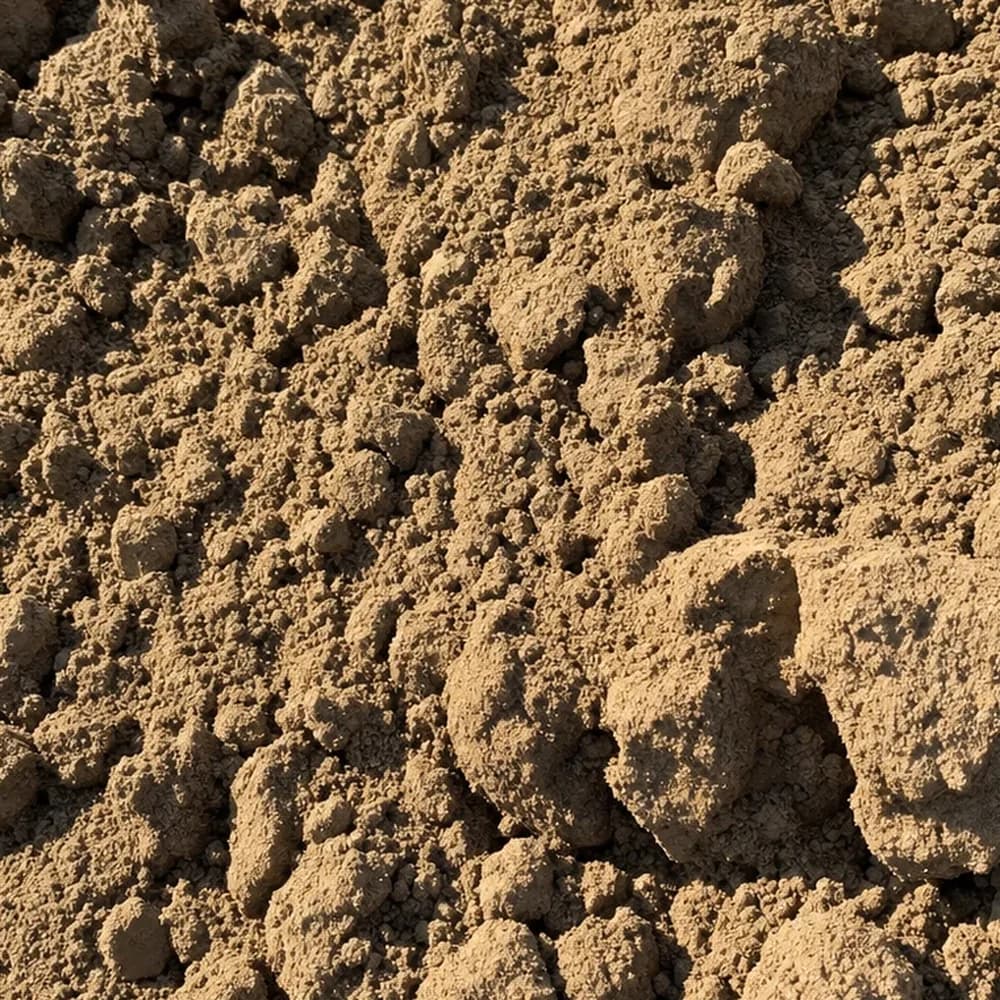
The problem across the Highland Rim and the Central Basin is not fertility so much as depth. Clay soils with chert fragments through them sit over limestone that is often close to the surface, and in the cedar glade country of the basin the rock is at the surface in places. On the plateau and the eastern ridges the soil over sandstone and shale is shallow and rocky.
Grass will grow on thin ground in a wet spring and then burn off in the first dry August, because there is nowhere for roots to go when the surface dries. A screened layer gives them somewhere. It does not change what is underneath, and it is worth being plain about that: a few inches of soil over compacted clay will not fix drainage, and it will not raise a low spot that the whole yard drains to. Shape and drainage come first. The soil is the finish.
Getting a scraped surface ready before the load lands
What goes underneath decides whether the layer works or sits there like a blanket.
Break the surface first. If a machine has been over it, the top few inches are compacted, and a fresh layer on that holds water at the joint and refuses to root through. A tiller, a ripper or a box blade with scarifiers pulling the surface up two or three inches lets the new soil knit into the old.
Then clear the debris and check the fall. Rock, root balls and chunks of subsoil all end up as high spots under a rake, and anything that sheds water away from the house or the barn has to still shed water once the layer is on.
For a new lawn, two to three inches spread over a broken surface is a working depth. For a bed, four to six inches gives root vegetables and shrubs something to work with. For filling a scraped or rutted area, measure the hollow and treat it as a volume rather than a depth. Where the hollow is deep, bulk fill dirt belongs at the bottom, with the screened layer only in the top few inches.
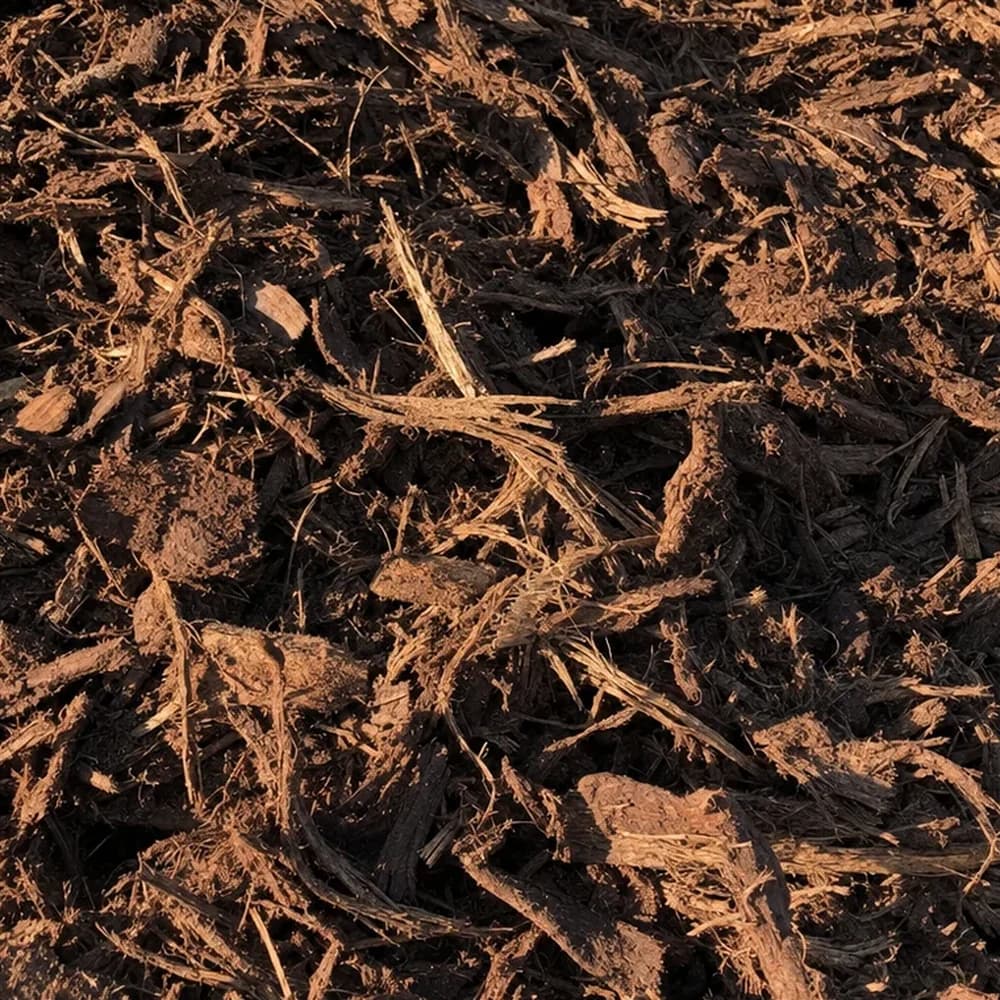
Two things this is not. It is not a planting mix, so a raised vegetable bed wants garden soil instead. And it is not a leveling course under paving, because soil holds water and moves under load; that job wants a screened fine material over a compacted base. Beds finished with this layer usually take a course of shredded mulch once the planting is in.
Watering, settling and the month after the rake
Fresh soil arrives fluffed up from the loader and the truck bed, and it will not stay that way. Expect a noticeable drop over the first few weeks as rain and watering close those spaces. A layer raked out to three inches loose commonly finishes closer to two and a half once it has been soaked and walked on, which is the reason to spread slightly proud of your target grade next to a walk, a patio or a drive edge.
Water it in deliberately rather than waiting on the weather. One soaking pass right after spreading settles the layer evenly and shows you the low spots while a rake can still fix them.
Holding a fresh layer on a grade and at an edge
Rain here arrives in volume, and the layer you just spread is the loosest material on the property. On anything with a grade, get cover on it before you leave for the evening. Seed and straw, an erosion blanket or sod all work, and something has to hold the surface until roots do. Run seeding across the slope rather than up and down it, because a rake line up a hill is a channel waiting for a storm.
At the edges, a mowing strip, a timber, a stone border or a shallow trench keeps the layer off a walk or a drive. Where it meets existing lawn, feather it out over a foot or two so the mower does not scalp the joint.
Yards of top soil for a fire ring apron, a barn pad verge and a drive edge
Three hypothetical examples, worked the way the site calculator does it: length times width times depth in inches, divided by twelve, divided by twenty seven.
The lawn ring around a fire pit area, from a 10 foot circle out to a 20 foot circle, at three inches. 0.7854 x (400 minus 100) = 236 square feet. 236 x 3 = 708, divided by 12 = 59 cubic feet. Divided by 27 = 2.2 cubic yards. Screened topsoil runs about 2,200 lb a cubic yard on this site's published figures, roughly 1.1 tons, so that ring is approximately 2.2 x 1.1 = 2.4 tons.
A 4 foot verge around a 30 by 40 foot barn pad, at four inches. The outer rectangle is 38 x 48 = 1,824 square feet, the pad is 1,200, so the band is 624 square feet. 624 x 4 = 2,496, divided by 12 = 208 cubic feet. Divided by 27 = 7.7 cubic yards.
Two 3 foot strips along 80 feet of gravel drive, at three inches. 2 x 80 x 3 = 480 square feet. 480 x 3 = 1,440, divided by 12 = 120 cubic feet. Divided by 27 = 4.4 cubic yards.
Those are cubic yards of loose material. Put the same figures through the topsoil calculator for the tonnage to order, and use the extra-material option, because settling means the arithmetic always runs a touch short.
Spring or fall, and which one a Tennessee seeding prefers
Work runs close to year round here. What limits a soil job is not frozen ground, it is saturated ground: clay that has taken a long winter and spring of rain will not carry a loader and smears rather than breaking up under a tiller.
For cool-season grass, early autumn does most of the work. The ground is still warm, the heat has come off, and seedlings get mild weeks ahead of them without competing with summer weeds. Spring is the second choice, and the risk is the July that follows it. For warm-season grass, late spring into early summer is the establishing window. Beds are less fussy: any dry stretch where the ground breaks up cleanly will do.
Picking a dump spot the wheelbarrow can reach
Soil is messier to move than stone and it does not wait. A pile left on grass for a week kills what is under it, and a pile on a drive through a thunderstorm runs down the slope.
Choose the spot with the wheelbarrow route in mind rather than the truck: downhill is one trip, uphill is three. Lay a tarp, have the rakes and the seed on site before the load arrives, and plan to move it that day. Delivery is arranged at checkout by ZIP code and the truck needs clear access to a spot where it can tip, which the delivery notes cover. Measure, work the yardage, then pick a quantity and a date here. For a tight gate or a soft lawn the truck would have to cross, describe it through the contact page first.
Quickly Calculate How Much You Need
Material: Top Soil
How to Measure
Measure the length and width of your project area in feet
Decide on depth in inches (2" for landscaping, 4" for driveways)
Enter the values above and we'll calculate the tonnage you need
Need help figuring out the right amount? We can help!
Call or text us at (615) 908-6867 and we'll help you calculate the right quantity for your project.
Not sure how much you need? The Topsoil Calculator has depth guides, coverage charts and worked examples for this material.
Frequently Asked Questions About Top Soil
Customer Reviews
Grabbed top soil from this company and it was top notch, plus the free delivery made it even better.
Bill E. · Chattanooga, TN · Verified Buyer
Decided on top soil from the team, ordering was smooth and the free delivery made it even better.
Christine G. · Murfreesboro, TN · Verified Buyer
Ordered top soil from these guys and it showed up right when they said it would. Free delivery was a nice bonus, and I'm really happy with how everything turned out.
Maria F. · Memphis, TN · Verified Buyer
Needed top soil for my yard and these guys delivered exactly what I needed.
Mike C. · Chattanooga, TN · Verified Buyer
Top Soil has 4 verified customer reviews with an average rating of 5 out of 5.