Dense Grade Base for Tennessee Barn Lots and Hill Lanes
Also sold as Road Base
Also known as: dense grade aggregate, mineral aggregate base
For a Tennessee barn pad or driveway, Dense Grade Base helps keep regular equipment traffic from turning soft ground into ruts.
- Size: 3/4 inch minus
- Grading: Graded mix of crushed stone, gravel and binding fines
- Type: Crushed aggregate blend
From $383 for 1 ton, delivery included (larger loads cost significantly less per ton)
Free delivery included
Free delivery anywhere in Tennessee
Pick a delivery date
Weekday delivery, earliest Oct 29
“Decided on Crusher Run from them and it was solid material, exactly what I needed for my driveway. Price was fair too, felt like good value and I'd order again.”
Christine K. · Verified Buyer
Get a Free Quote
Fill out the form and our sales team will get back to you within the hour.
Size and Grading
- Size
- 3/4 inch minus
- Grading
- Graded mix of crushed stone, gravel and binding fines
- Type
- Crushed aggregate blend
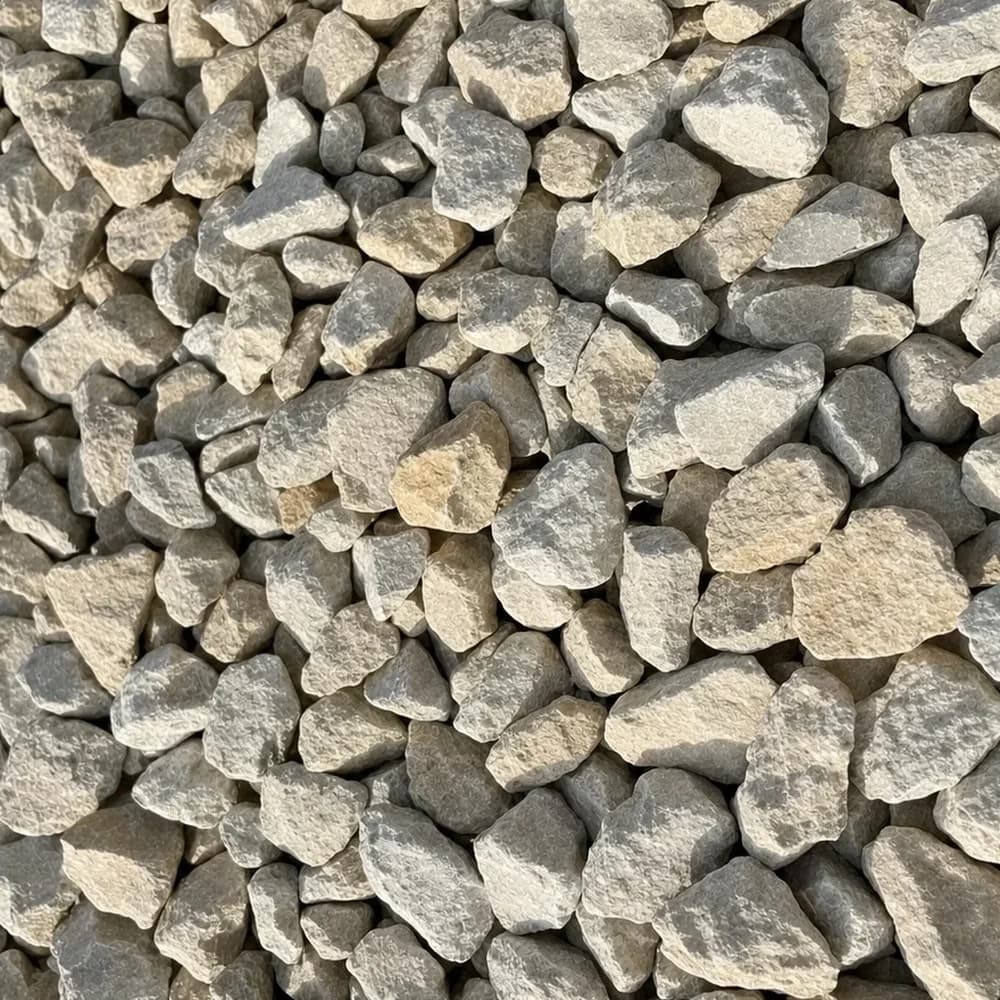
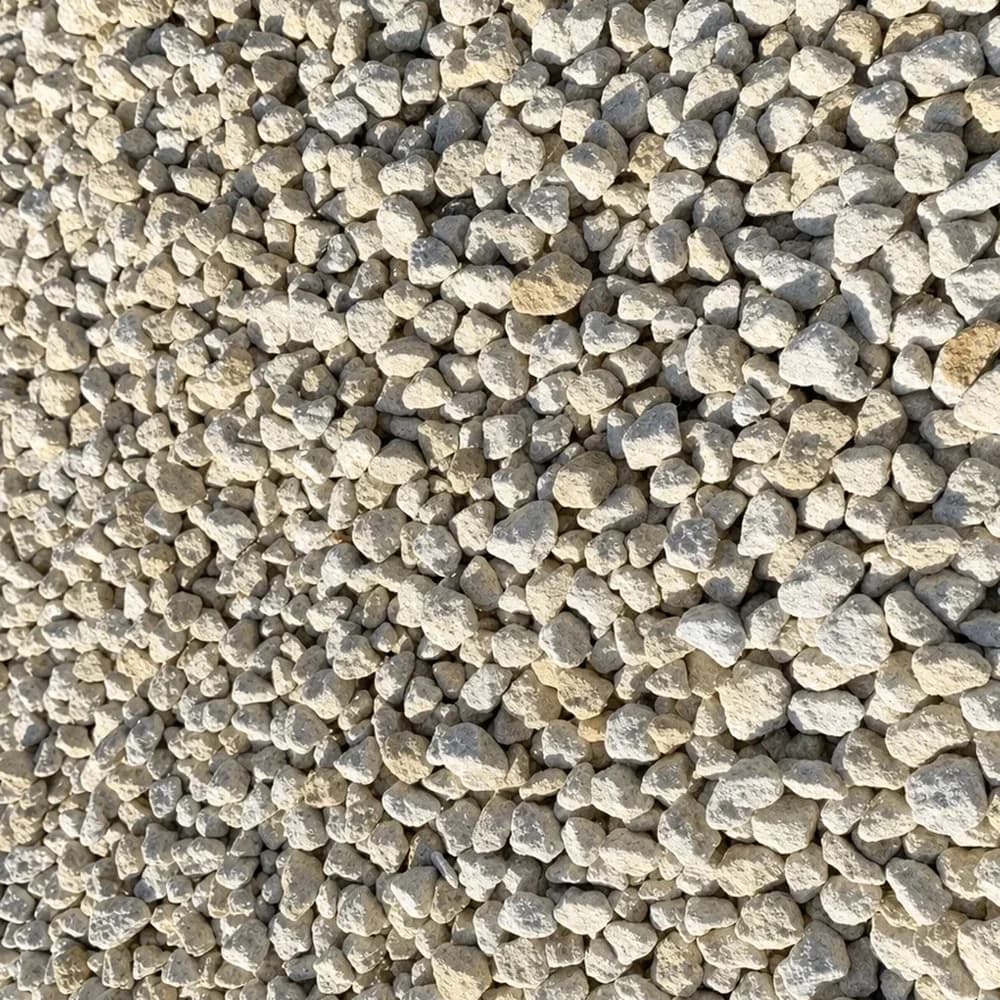
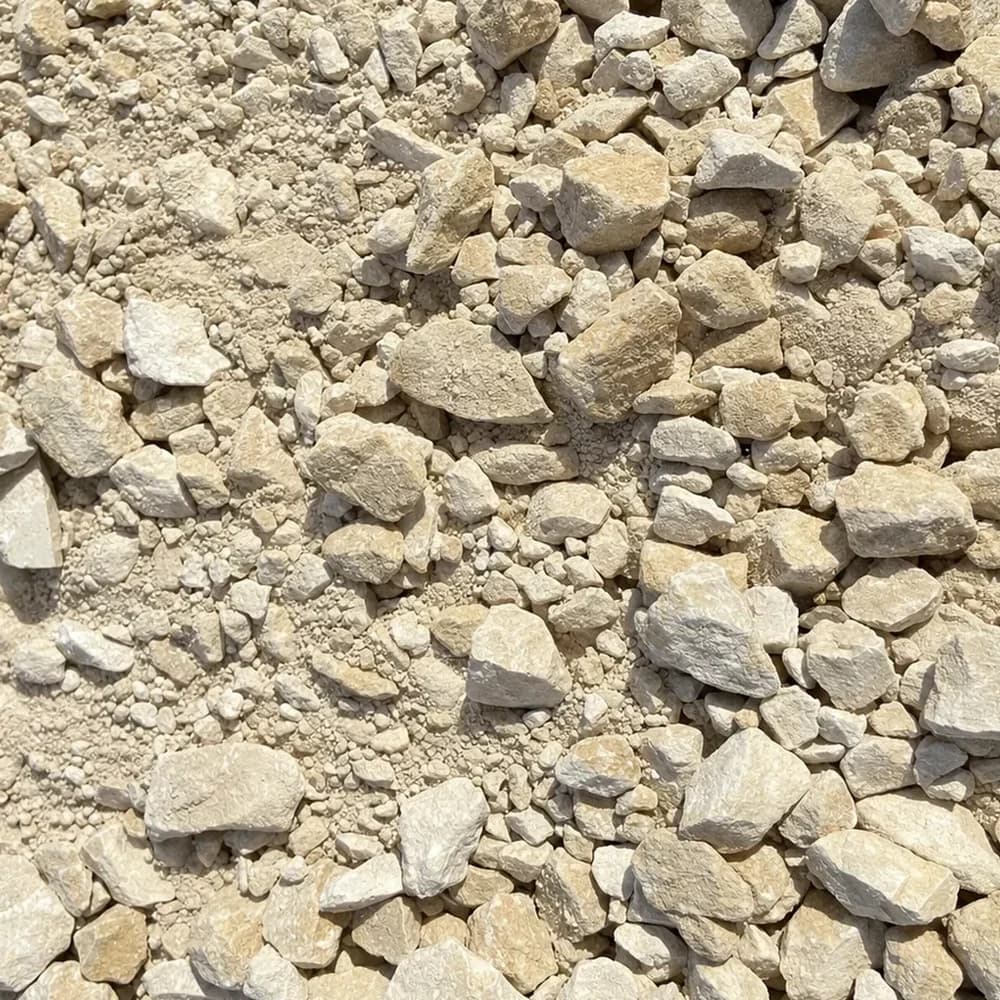
Tip a tandem load out beside a barn lot and the pile looks unremarkable. Gray, dusty, the biggest pieces about an inch across, with everything from that size down to rock flour packed in around them. Grab a handful and squeeze and it holds its shape rather than running through your fingers. That is the whole point of Dense Grade Base. It is graded to lock up, not to drain, and on ground that runs from cherty clay across the Highland Rim to thin soil over rock on the eastern ridges, a layer that locks up is what stops a loaded truck finding the soft place underneath.
Dense Grade Base earns the order when the loads get heavy
The material is a graded blend of crushed stone, gravel and binding fines at one inch minus. Under a roller the larger pieces bear against one another while the fines close the gaps, so the finished layer spreads weight across its width instead of letting a tire punch through in one spot.
Order it when what sits on top is heavy or repeated. A barn lot that takes a tractor and a stock trailer. An entrance a delivery truck uses every week. The pad under a slab. A lane that has to stay passable through a wet February, which is a more common problem here than frozen ground. Order it when the subgrade is what is failing, because that is the layer it replaces.
The layer has a formal name in this state. TDOT specifies road base as mineral aggregate base under Section 303, with Type A base built from Class A aggregate at Grading D in Section 903.05. When an engineer or a county inspector writes that on a plan sheet, graded base stone of this kind is what they are describing. That is how material gets specified locally rather than a certification carried by this storefront.
Three places on a hilly lot where graded base is the wrong call
The fines that make it work under load are the reason it fails elsewhere.
A footing drain or a wall backfill needs water to travel through the stone, and fines close those channels inside a season or two. The washed #57 Stone is the size for that work.
A dry creek line across a yard is meant to be looked at. A compacted gray layer reads as a construction scar in the middle of a lawn, and rounded river rock is what belongs in the channel.
A garden path gets walked barefoot in July. A base course is hard, dusty in a dry August and unfriendly underfoot, so the finer walkway gravel is the surface to order there.
Barn lots, construction entrances and the lanes that feed them
Three jobs account for most of the orders on a hobby farm or an acreage lot.
A construction entrance is the strip between the county road and the work, and it exists so that mud stays on the property. It takes the deepest layer of the three because every wheel that leaves the site crosses it loaded.
A barn lot or equipment pad is a wide, flat area that has to stay firm when a tractor turns on it. Turning is harder on a surface than driving straight, so the corners of a pad wear before the middle does.
A lane on a grade has a second problem. Water runs down the wheel tracks, and once it does, it takes the fines with it. Crown the lane so water sheds to both sides and give it somewhere to go, because runoff that concentrates in one line on a clay hillside will cut a rut faster than traffic ever does. Where limestone lies close under the Central Basin or the eastern valleys, keep that runoff routed across the surface and away from any sinkhole or swallow hole on the property.
The layer nobody looks at, and the one that takes the tires
Graded base is designed to be covered. Leave it exposed as the driving surface and it will do the job, but the fines wash off the crown in the first hard summer storm and you are left topping it up each year.
Most drives here end up as two layers. The base goes in, gets shaped and gets rolled. Then a surfacing stone goes over it, either driveway gravel or a washed stone, and that top course takes the wear and gets refreshed instead of the base. If you are building in one pass and only want one material, Crusher Run at three quarter inch minus is the smaller-topped version of the same idea and finishes tighter underfoot.
As a working depth, plan four inches compacted where a car and a pickup are the heaviest things crossing, six inches where a loaded trailer or a tractor is involved, and eight inches for an entrance that sees tandem trucks. Place it in lifts of roughly four inches rather than all at once, damp it lightly, and roll each lift before the next one goes down. Those are working figures, not a published specification, so anything engineered gets its depth from the plan.
Counting yards for an entrance, a patio bed and a creek crossing
Three hypothetical examples, worked with the same arithmetic the site calculator uses: length times width times depth in inches, divided by twelve, divided by twenty seven.
A construction entrance 40 feet by 14 feet at eight inches. 40 x 14 = 560 square feet. 560 x 8 = 4,480, divided by 12 = 373 cubic feet. Divided by 27 = 13.8 cubic yards. Road base runs about 3,000 lb a cubic yard on this site's published figures, roughly 1.5 tons, so that entrance is approximately 13.8 x 1.5 = 20.7 tons.
A paver patio bed 16 feet by 20 feet at six inches. 320 square feet. 320 x 6 = 1,920, divided by 12 = 160 cubic feet. Divided by 27 = 5.9 cubic yards.
A lane crossing where a dry creek line cuts through, 18 feet along the lane by 12 feet wide at eight inches. 216 square feet. 216 x 8 = 1,728, divided by 12 = 144 cubic feet. Divided by 27 = 5.3 cubic yards.
Those are cubic yards. To turn them into the tonnage you actually order, run the same figures through the road base calculator, which applies the weight conversion for this material and has a five per cent option for the material that disappears into a soft subgrade.
Setting a date and a drop spot on a hill lot
The awkward part of a hill lot is rarely the stone. It is where a tandem can stop, tip safely and pull out again without dropping a wheel off a soft shoulder. Walk the route first, pick a firm spot as close to the work as the truck can reach, and clear the low limbs over it.
Delivery gets arranged at checkout by ZIP code, and the truck needs clear access to somewhere it can dump. How that works is worth reading before you pick a date. Measure the area, work the yardage, then set a quantity and a date with Tennessee Rock Supply on this page. If the lane in is steep, narrow or crosses a culvert you are unsure of, describe it through the contact page before you book.
Quickly Calculate How Much You Need
Material: Dense Grade Base
How to Measure
Measure the length and width of your project area in feet
Decide on depth in inches (2" for landscaping, 4" for driveways)
Enter the values above and we'll calculate the tonnage you need
Need help figuring out the right amount? We can help!
Call or text us at (615) 908-6867 and we'll help you calculate the right quantity for your project.
Not sure how much you need? The Road Base Calculator has depth guides, coverage charts and worked examples for this material.
Frequently Asked Questions About Dense Grade Base
Customer Reviews
Got Crusher Run delivered by the team and everything showed up right where I needed it. I'd definitely order again and recommend them.
Kim R. · Chattanooga, TN · Verified Buyer
Decided on Crusher Run from them and it was solid material, exactly what I needed for my driveway. Price was fair too, felt like good value and I'd order again.
Christine K. · Clarksville, TN · Verified Buyer
Had Crusher Run delivered by Tennessee Rock Supply and it was exactly what I needed. They kept me updated the whole time and made everything easy.
Heather W. · Knoxville, TN · Verified Buyer
Decided on Crusher Run for my driveway, and the team made the whole thing easy. The Crusher Run was clean and consistent, and I'm really happy with how it packed down.
Doug M. · Memphis, TN · Verified Buyer
Needed Crusher Run for my driveway and the team made it easy. The driver was friendly and careful about where he placed it. Really happy with how it all turned out.
Tom V. · Memphis, TN · Verified Buyer
Dense Grade Base has 5 verified customer reviews with an average rating of 5 out of 5.
Dense Grade Base delivery across Tennessee
- Nashville
- Memphis
- Knoxville
- Chattanooga
- Clarksville
- Murfreesboro
- Franklin
- Johnson City
- Jackson
- Hendersonville
- Smyrna
- Spring Hill