Road Base Calculator for Hill Lanes, Barn Lots and Site Entrances
Enter your project dimensions
The lane that brings most people here is the one that carries a pickup all summer and then goes soft the first week of February, when the clay under it has been wet for a month. Depth is what fixes that, and depth is also what moves the order more than anything else you can type in. So start with the layer, not the length.
How deep the layer goes under a pickup, a trailer and a tandem truck
| What crosses it | Compacted depth | One ton covers about |
|---|---|---|
| Car and pickup on firm ground | 4 inches | 54 sq ft |
| Everyday traffic and delivery trucks | 6 inches | 36 sq ft |
| Tractor, stock trailer, equipment standing | 8 inches | 27 sq ft |
| Soft or wet subgrade, container corners | 10 to 12 inches | 18 to 22 sq ft |
Read that right-hand column before you measure anything. At 4 inches a ton of base reaches over fifty square feet, and at 12 inches the same ton covers a strip you could park a mower on. Doubling the depth doubles the order, and on a lane of any length that is the difference between one load and three. Working figures, not an engineered specification: anything with a plan sheet takes its depth from the plan.
Centerline length, average width, and the field that stops at 24 inches
For a lane, walk the centerline for the length and take the width in three or four places, then average them. Most farm lanes flare at the road and pinch between the gateposts, and the average is closer to the truth than either end.
The tool takes Rectangle, Circle or Multiple areas, with up to five pieces added into one total, so a lane plus a turning apron plus the pad at the barn door can be one run rather than three. Length, width and diameter go in as feet. Depth goes in as inches, anywhere from 0.25 to 24, which covers every structural layer a private lane is likely to need. Choose the material, since the tonnage comes from that material's own weight, then read off cubic yards, tons and cubic feet. The tick box beside the depth field adds ten percent for compaction and spillage and starts ticked, and it is worth keeping on here, for reasons below.
Ninety feet up to a barn, and a 12 by 26 pad for a container
These are made-up jobs, worked through so you can follow the same route with your own numbers.
The lane. Ninety feet long, averaging 10 feet wide, finished at 6 inches. That is 900 square feet. 900 x 6 = 5,400, divided by 12 gives 450 cubic feet, divided by 27 gives 16.67 cubic yards. At 1.50 tons a yard that is 25.0 tons, or 27.5 with the ten percent added. Two things follow from the figure rather than from the arithmetic: set two drop points along the lane instead of one heap at the gate, and plan on a box blade or a skid steer, because twenty-five tons moved with a shovel is a week of evenings.
The pad. A shipping container sitting 12 by 26, at 8 inches because the load lands on four corners rather than spreading out. That is 312 square feet. 312 x 8 = 2,496, divided by 12 gives 208 cubic feet, divided by 27 gives 7.70 cubic yards, and 11.6 tons at the same 1.50. Woven geotextile under it is worth having on clay, and the corners are where the impressions show up by spring if the layer was thin.
One inch minus at 3,000 lb a yard, and where crusher run takes over
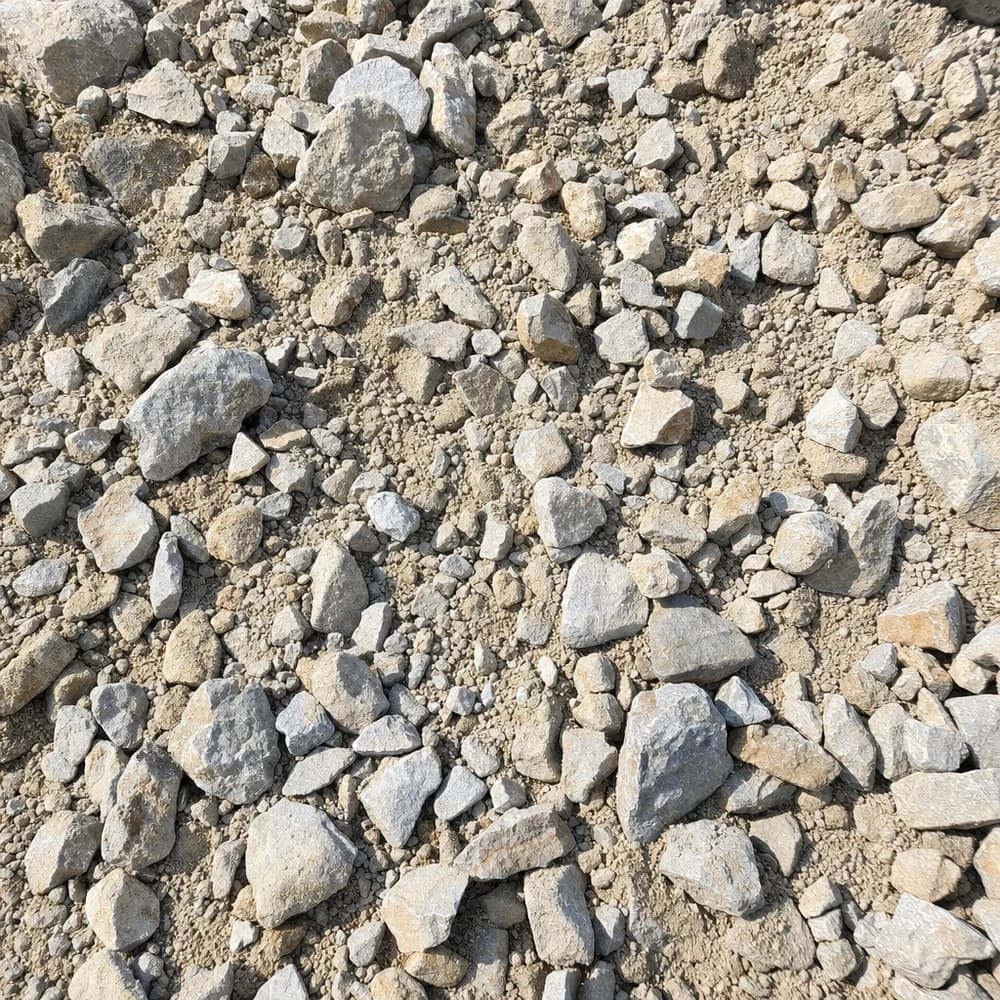
Dense Grade Base is the product this tool is set up for: graded crushed stone and fines at one inch minus, about 3,000 lb a cubic yard, which is the 1.50 tons a yard used in both examples above. The larger top size is the point of it. Bigger pieces bear against one another under load while the fines close the gaps, so the layer carries weight across its width instead of letting a wheel punch through in one place. TDOT specifies base of this kind as mineral aggregate base, Type A at Grading D, which is how the material gets described on a plan sheet around here rather than anything this storefront certifies.
Crusher Run is the other base stone on this site and it is not a second version of this one. It is three quarter inch minus, a smaller top size that screeds and grades finer, which is why it goes under pavers and on drives where the finish underfoot matters. It has its own crusher run calculator. Both weigh the same by the yard, so switching between them changes the surface and the workability, not the tonnage.
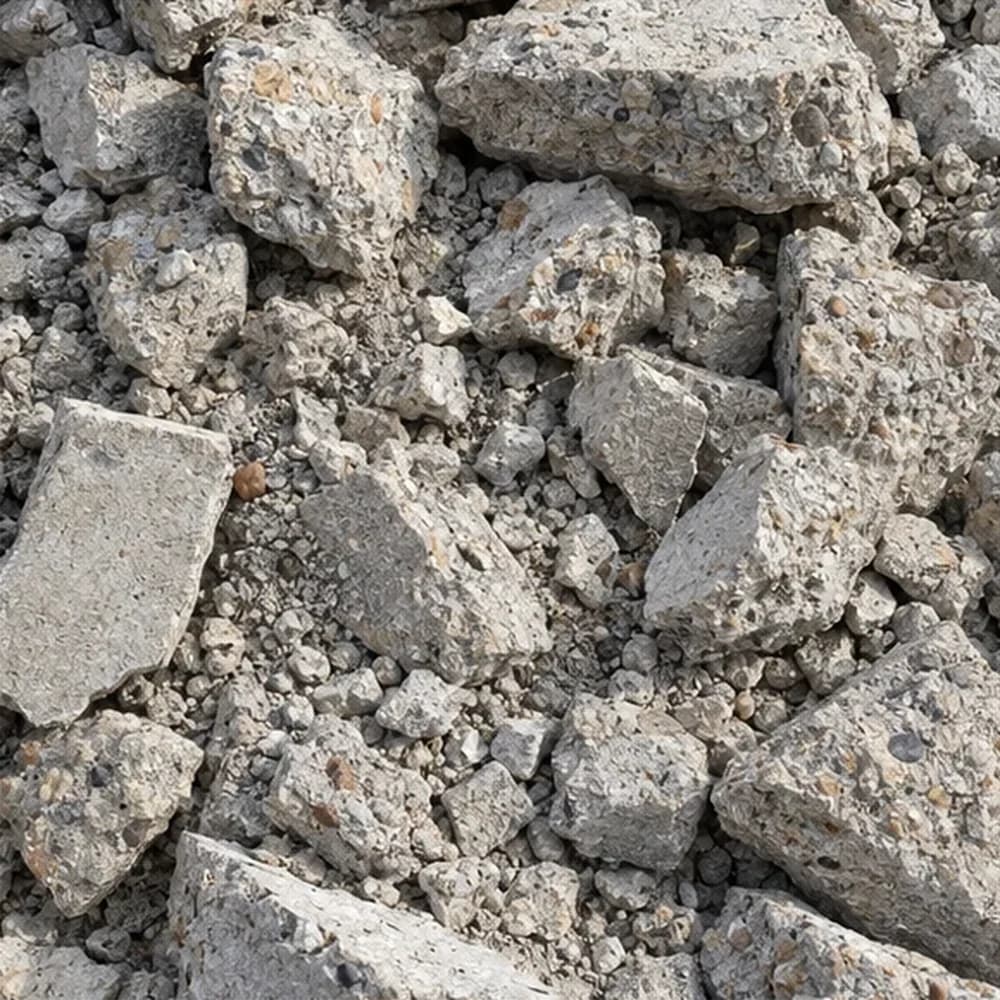
Recycled crushed concrete behaves much the same in a lane and takes the same numbers here. Check what the county will accept before you swap, because some specifications call for virgin aggregate.
Lifts, a crown, and the margin ten percent does not stretch to
Strip the sod and topsoil off before any stone goes down. Base laid over organic soil will let mud work up through it however deep you go, and on saturated clay that happens in one wet stretch.
Place it in lifts of 4 inches or less and roll each one before the next goes on. A lane built in a single 8 inch drop is a soft lane with a hard crust. Shape a crown of about 2 to 3 percent so rain sheds to both sides, and on a hill, give that water somewhere to land at the bottom, because runoff that concentrates in one wheel track on a clay slope will cut a rut faster than any amount of traffic. Where limestone lies close under Middle and East Tennessee ground, keep that discharge routed across the surface and well away from any opening that already swallows storm water.
The ten percent covers spillage off the tailgate and the bit that vanishes into the rolling. It does not cover a soft spot. If there is a place in the lane that ruts every winter, dig that section out, measure it as a separate area in the tool at its own greater depth, and add the two results. That is what Multiple areas is for. Finish the job with a surface course of driveway gravel or #57 stone so the wear happens to a layer you can top up, rather than to the one holding everything together.
Common questions
The truck is loaded by weight but the layer is measured in inches. Which number do I work from?
Tons, for base stone. The cubic yards line tells you the size of the hole you are filling, which is useful when you are picturing the pile, and the tons line is what the order is placed in. On this material the conversion is 1.50 tons for every cubic yard, so the two never drift apart.
Is the 6 inches what I dump, or what I am left with after rolling?
Enter the finished compacted depth. Loose stone settles as it is rolled, so the pile that goes down is deeper than the layer you end up with, and the ten percent box is a nod toward that rather than a full allowance. If a specification gives you a compacted thickness, that is the number for the depth field.
There is a turning apron at the top of the lane. How do I size a round one?
Switch to Circle and enter the width across it in feet. An apron 24 feet across at 6 inches works out as 0.7854 x 24 x 24 = 452 square feet, so 452 x 6 = 2,712, divided by 12 is 226 cubic feet, divided by 27 is 8.4 cubic yards, and 12.6 tons. Add it to the lane with Multiple areas rather than running it twice.
How do I run the same sum on paper before I order?
Square feet, times depth in inches, divided by 12, gives cubic feet. Divide by 27 for cubic yards and multiply by 1.5 for tons of base. A 40 by 12 apron at 4 inches: 480 square feet, 480 x 4 = 1,920, divided by 12 is 160 cubic feet, divided by 27 is 5.9 yards, and 8.9 tons.
Why does the same pad come out heavier in base stone than in washed stone?
The fines. Graded base fills its own voids and lands at roughly 3,000 lb a cubic yard, while clean washed sizes such as #57 leave the gaps open and run nearer 2,800, or 1.40 tons a yard. Same space, different weight, so change the material in the list and the tons line moves even though nothing about your measurements has.
Related calculators
Thirty tons. Zero delivery fees.
Road base priced per ton, hauled free, at lane quantities where hauling usually costs the most.