#4 Crushed Stone for Tennessee Entrances, Wet Subgrades and Creek Beds
On a Tennessee barn pad or cleared slope, #4 Crushed Stone helps create drainage where standing water can undermine the work.
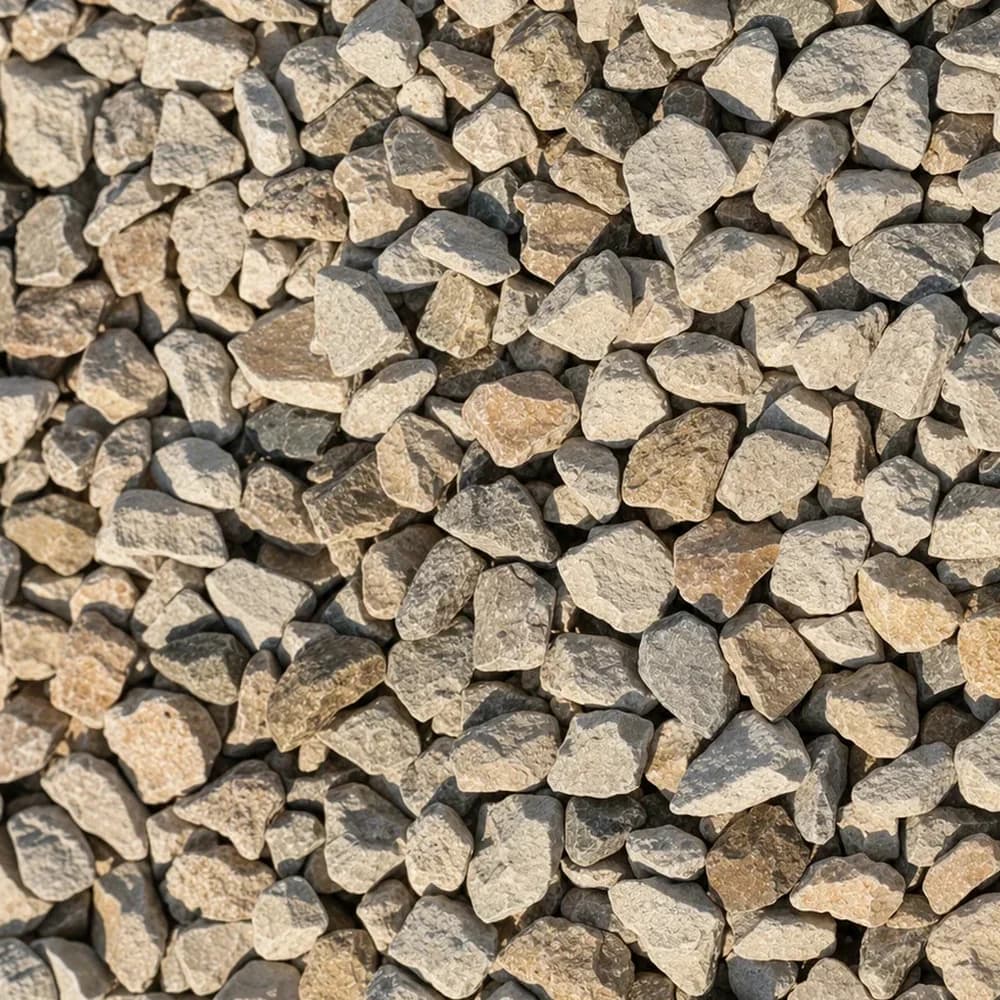
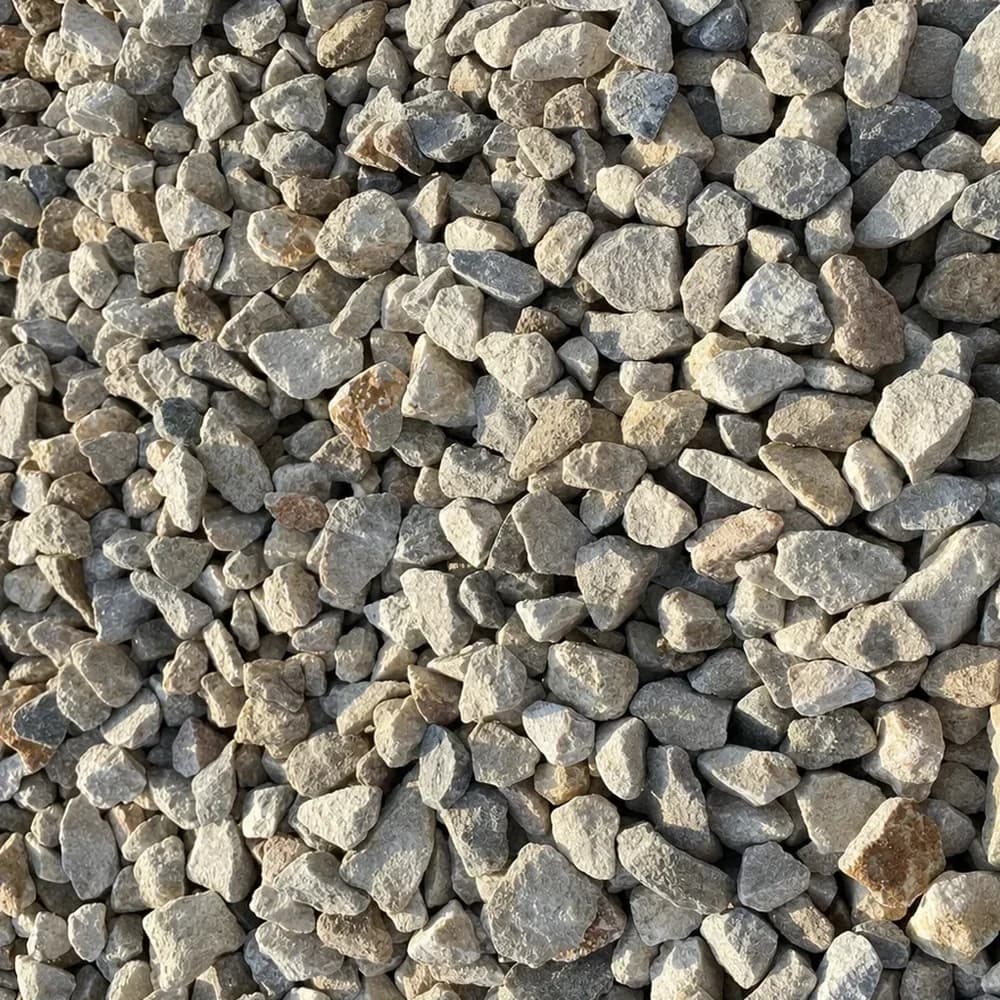
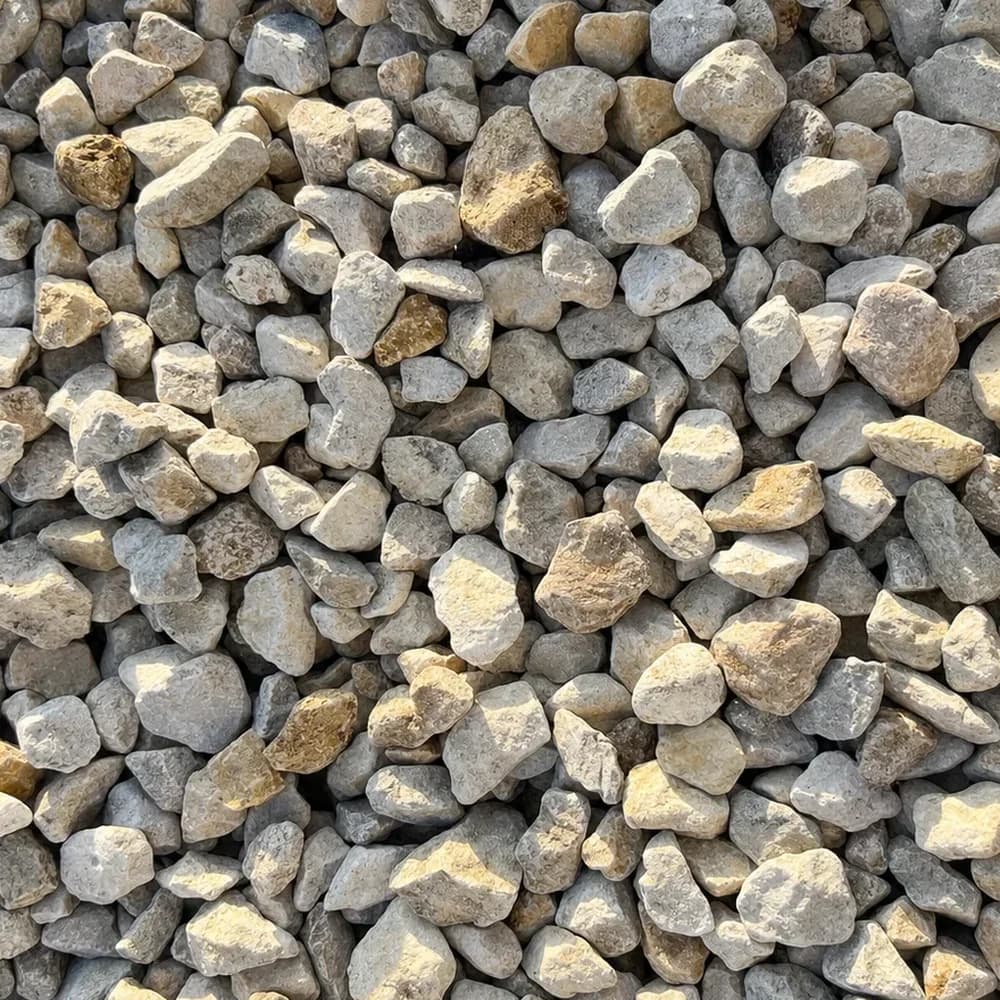
- Size: About 3/4 inch to 1-1/2 inches
- Grading: #4
- Type: Angular crushed stone
From $434 for 1 ton, delivery included (larger loads cost significantly less per ton)
Free delivery included
Free delivery anywhere in Tennessee
Pick a delivery date
Weekday delivery, earliest Oct 29
“Went with Tennessee Rock Supply for crushed stone, and ordering was easy from start to finish. Delivery showed up when expected and the crushed stone was exactly what I needed.”
Paul H. · Verified Buyer
Get a Free Quote
Fill out the form and our sales team will get back to you within the hour.
Size and Grading
- Size
- About 3/4 inch to 1-1/2 inches
- Grading
- #4
- Type
- Angular crushed stone
The decision in front of most people reading this is not which stone looks right on top. It is how far down the trouble goes. A pad or an entrance that pumps water and clay every time a loaded truck crosses it will do the same thing next spring no matter how much surface gravel goes on, because the problem sits under the surface. #4 crushed stone is the coarse open layer that goes in at the bottom of that build, sized between 3/4 and 1-1/2 inches, angular, with nothing fine in it at all.
Choose #4 crushed stone where water has to leave the bottom of the build
Four situations make this the right order.
Ground that stays saturated. On the clay of the Highland Rim and the Central Basin, and in the flat bottomland out west, a subgrade can hold water for days after heavy rain. A thick course of large open stone gives that water somewhere to sit and somewhere to drain to, well below the layer carrying traffic.
An entrance that takes construction traffic. Big angular pieces bed into soft ground and knock mud off tires instead of turning into it.
A channel or a slope that has to move volume. Storm runoff here arrives fast and concentrated, and open stone lets water through the layer rather than across the top of it.
A gabion basket. The size is in the right band to fill one without spilling through the mesh.
Skip it where the surface is what you are building
The same properties make it wrong for anything a person or a car meets directly.
It will not compact into a firm driving surface. There are no fines in it to bind the pieces, so a wheel crossing a layer of 3/4 to 1-1/2 inch stone works pieces out of place instead of riding over a locked mat. A drive built of this alone is noisy, loose and hard on tires, which is why Crusher Run sits above it in a proper build.
It is also unpleasant to walk on, impossible to wheelbarrow across, and too coarse for bedding anything smaller than itself. If you want one material to do the whole job, this is not that material. It is the bottom half of a two-part answer.
A construction entrance on cleared Tennessee clay
An entrance is the clearest case. Traffic comes off a road onto bare clay, and within a week the clay is on the road and the entrance is a rut.
Build it long enough to matter, at least fifty feet where trucks are turning in, and deep. Strip the topsoil, lay woven geotextile over the subgrade, then place six to eight inches of this size and let the traffic bed it in. The voids between the pieces are what pull mud off a tire, so do not blind the surface with fines and do not let the layer get thin at the road edge, which is where it always fails first.
Under a paver patio on ground that never dries
For most patios on firm ground you do not need this stone at all; a compacted graded base is the correct build and a coarse open layer under it is wasted money.
The exception is a site where the subgrade is holding water, which on a hill lot usually means the patio has been cut into a slope and is catching what runs down it. There, a lower course of large open stone acts as a drainage reservoir with a graded base compacted on top of it, and the two layers are separated from the clay and from each other by fabric. Get the water an exit at the downhill side as well, or the reservoir simply fills and stays full.
A dry creek bed sized for a summer downpour
Dry creek beds do two jobs on a hill lot: they look like something, and they carry the runoff that was cutting a gully across the lawn.
The structure goes in first. Excavate the channel with a defined bottom and sloped sides, lay fabric, then place this size as the working layer that takes the flow and holds the shape. Decorative rounded River Rock goes over the top, and the larger pieces of Large River Rock or a course of RipRap armor the inlet and the outlet, which is where scour starts. Build the channel wider and shallower than feels necessary, because a narrow deep channel moves water faster and fast water is what cuts.
Fabric, edges and the silt question in a trench
Two things decide whether an open stone layer is still working in five years.
The first is separation. Clay pumps upward into open voids under load, and once it does, the layer holds water rather than moving it. Woven permeable geotextile between the subgrade and the stone stops that, and it is the quickest part of the build to get right.
The second is containment. Large angular pieces stay put on a slope better than anything rounded, but on the edge of a pad or a drive they will still walk outward over years of traffic. A timber, a curb line or simply a shoulder of graded material holds them.
Tons for the entrance, the patio and forty feet of creek bed
Three hypothetical examples, worked the way this site's calculator works: length times width times depth in inches, divided by twelve, divided by twenty seven, then multiplied by weight. Stone in this coarse family runs about 2,900 lb per cubic yard on the figures this site publishes, roughly 1.45 tons per cubic yard.
A construction entrance 50 feet by 12 feet at eight inches. 600 square feet. 600 x 8 = 4,800, divided by 12 = 400 cubic feet. Divided by 27 = 14.8 cubic yards, about 21.5 tons.
A lower drainage course under a patio on a wet cut, 16 feet by 14 feet at six inches. 224 square feet. 224 x 6 = 1,344, divided by 12 = 112 cubic feet. Divided by 27 = 4.1 cubic yards, about 6 tons. The graded base above it is a separate order.
A dry creek bed 40 feet long and 3 feet wide at eight inches. 120 square feet. 120 x 8 = 960, divided by 12 = 80 cubic feet. Divided by 27 = 3 cubic yards, about 4.3 tons.
Run your own numbers through the stone calculator for the tonnage, and add a margin on any excavated shape, because a trench or a channel always takes more than the drawing says.
Ordering the bottom course before the top one
Sequence matters more here than on most orders. The open stone goes in first, gets bedded and separated, and only then does the graded material go over it, so the two loads are usually a week or more apart.
Work out both quantities before you order either, because it is the base depth that sets how much surface material you need above it. Delivery is arranged at checkout by ZIP code and the truck needs clear access to somewhere it can tip, which the delivery page covers. Measure, run the arithmetic, then pick a quantity and a date here. For an entrance onto a public road, or a channel that discharges off your property, ask the questions through contact before you book anything.
Quickly Calculate How Much You Need
Material: #4 Crushed Stone
How to Measure
Measure the length and width of your project area in feet
Decide on depth in inches (2" for landscaping, 4" for driveways)
Enter the values above and we'll calculate the tonnage you need
Need help figuring out the right amount? We can help!
Call or text us at (615) 908-6867 and we'll help you calculate the right quantity for your project.
Not sure how much you need? The Stone Calculator has depth guides, coverage charts and worked examples for this material.
Frequently Asked Questions About #4 Crushed Stone
Customer Reviews
Went with Tennessee Rock Supply for crushed stone, and ordering was easy from start to finish. Delivery showed up when expected and the crushed stone was exactly what I needed.
Paul H. · Knoxville, TN · Verified Buyer
Got crushed stone from this company and it was a solid experience, delivery was easy and the load looked good.
Scott D. · Knoxville, TN · Verified Buyer
Decided on crushed stone from this company and I'm really happy with how it turned out. The free delivery was a huge plus, and everything showed up when they said it would. I'd definitely order from them again.
Frank L. · Memphis, TN · Verified Buyer
Needed crushed stone for a project at home and Tennessee Rock Supply made it easy. The crushed stone was clean and consistent, and I'd definitely order from them again.
Diane W. · Franklin, TN · Verified Buyer
Got crushed stone from them and everything went great. The driver was friendly and careful about where he placed it. Super happy with the whole order and would use them again.
Paul I. · Knoxville, TN · Verified Buyer
#4 Crushed Stone has 5 verified customer reviews with an average rating of 4.8 out of 5.
#4 Crushed Stone delivery across Tennessee
- Nashville
- Memphis
- Knoxville
- Chattanooga
- Clarksville
- Murfreesboro
- Franklin
- Johnson City
- Jackson
- Hendersonville
- Smyrna
- Spring Hill