Railroad Ballast for Tennessee Barn Pads, Yards and Wet Access Routes
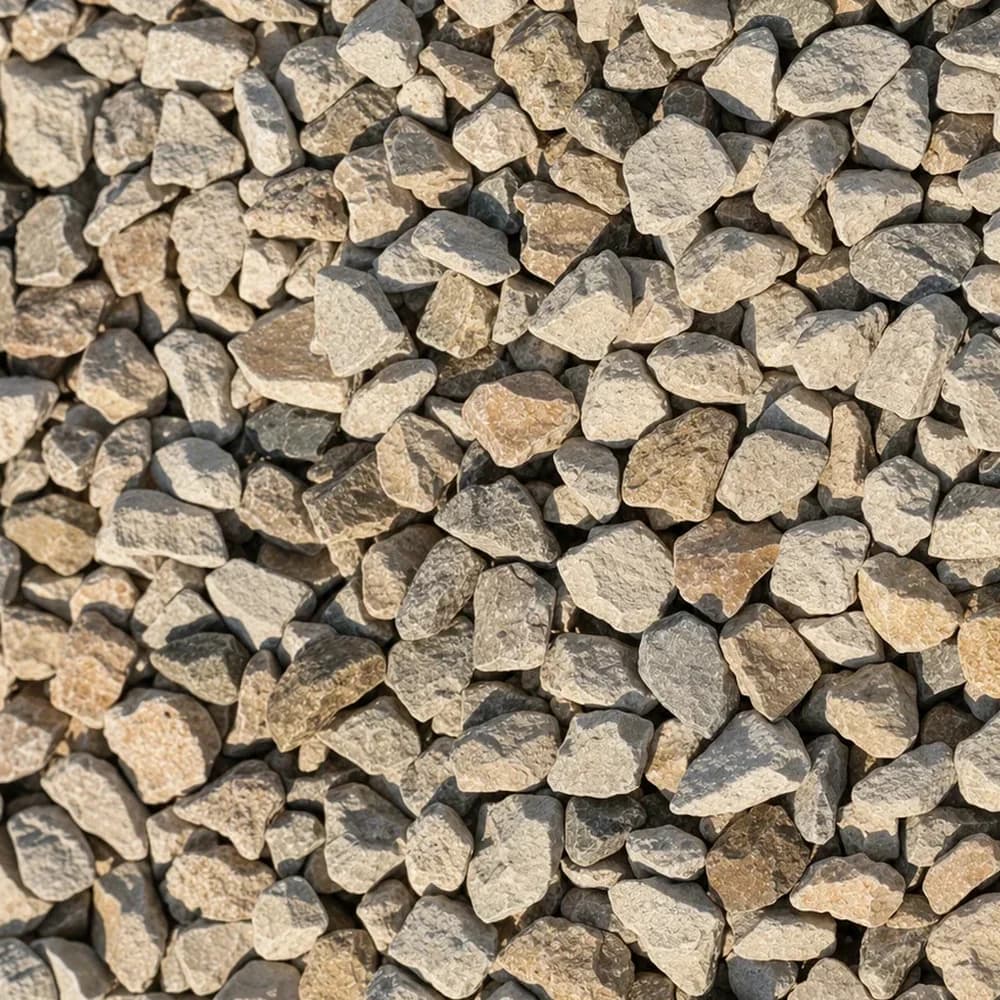
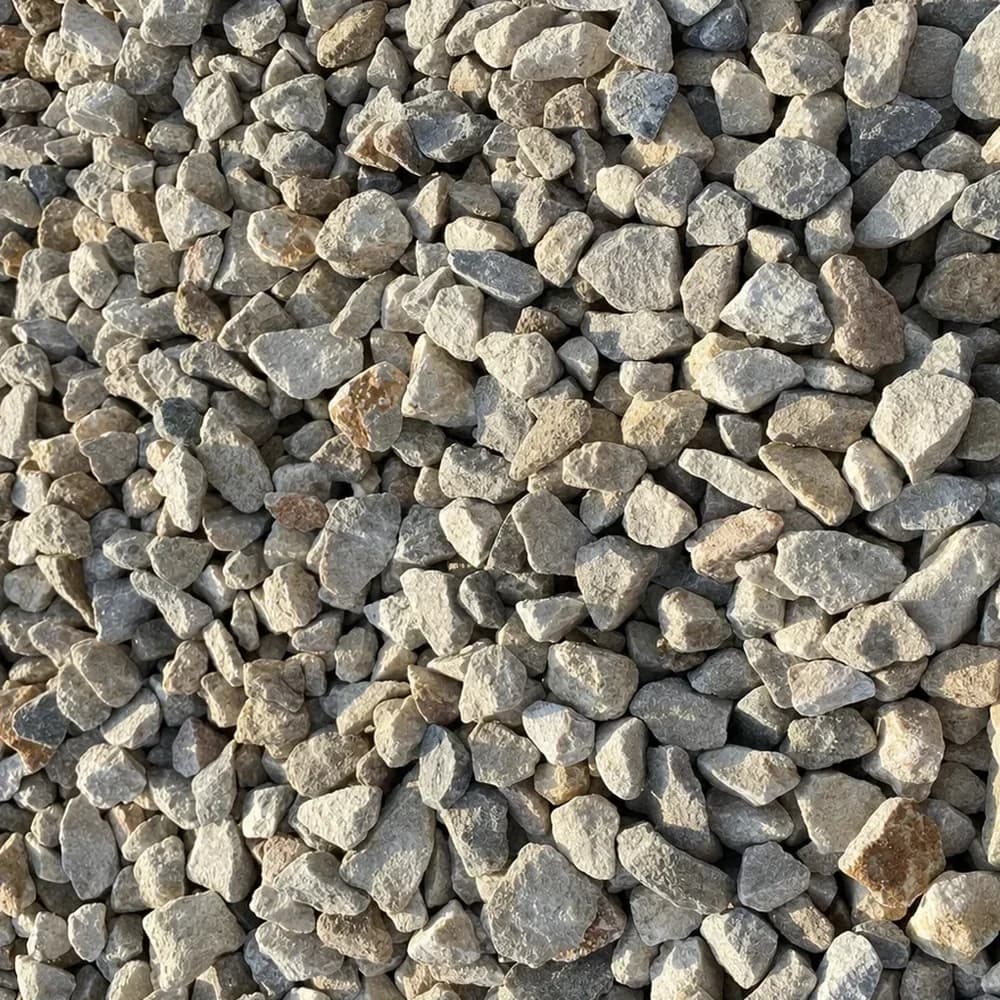
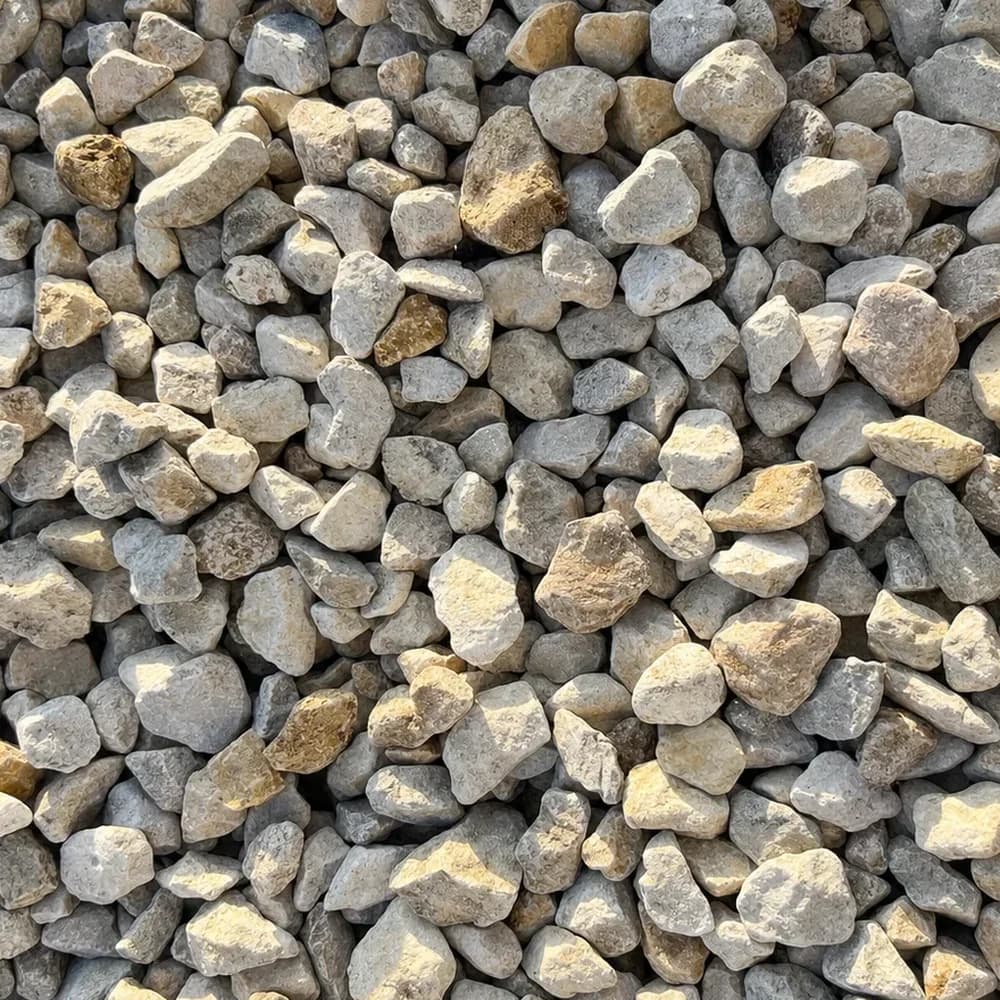
On Tennessee ground, Railroad Ballast creates an open stone layer for rail beds, barn pads, and work routes that need load support and drainage.
- Size: Roughly 1 inch to 2.5 inches
- Grading: Graded to interlock under load while draining freely
- Type: Large angular crushed stone
From $434 for 1 ton, delivery included (larger loads cost significantly less per ton)
Free delivery included
Free delivery anywhere in Tennessee
Pick a delivery date
Weekday delivery, earliest Oct 29
“Grabbed railroad ballast from Tennessee Rock Supply and it was exactly what I needed. Delivery delivered when they said, which made the whole thing easy.”
Tara G. · Verified Buyer
Get a Free Quote
Fill out the form and our sales team will get back to you within the hour.
Size and Grading
- Size
- Roughly 1 inch to 2.5 inches
- Grading
- Graded to interlock under load while draining freely
- Type
- Large angular crushed stone
Nine orders in ten start with the same square of ground: the corner of a yard or the area inside a gate where every vehicle turns, where the water off the roof and the slope both end up, and where by mid February there is a wallow that a tractor has to be driven through carefully. Smaller gravel has been tipped in there twice already and vanished into the clay. Railroad Ballast is the material people reach for when the answer has to be big enough that the ground cannot swallow it: angular crushed stone roughly one inch to two and a half, graded to interlock under weight while water runs straight out of it.
The corner of the lot that never dries out
Understanding why the previous loads disappeared is worth a minute, because it decides how this one gets built.
Soft saturated clay under a wheel does not compress evenly. It displaces sideways and upward, so a layer of small stone gets pushed into it and pumped through it until the two materials are mixed and neither one works. The stone has not gone anywhere. It is in the mud, doing nothing.
Large angular pieces resist that in two ways. They are too big to be pushed easily into soft ground, and they carry load by bearing against each other rather than by forming a compacted mat, so the layer keeps working even when what is underneath it is wet. The voids between them stay open, which lets water leave the ground below rather than sitting under the traffic.
What happens when a loaded tire meets two inch stone on wet clay
On the cherty clay of the Highland Rim and the Central Basin, and on the flat wet bottomland in the west of the state, this is the material that keeps a working area usable through the wettest months.
Two things are worth being realistic about. First, the ballast will press down into soft ground unless something separates it, which is why fabric matters more here than on any other material in this catalogue. Second, the surface will never be smooth. Pieces of this size stand proud, roll under a boot and catch a wheelbarrow wheel, and that is normal for what it is.
On the shallow rocky ground of the eastern ridges and the plateau the subgrade is firmer to start with, and the same layer goes in thinner and does more.
Fabric first, bucket rather than rake
Placing large stone is not the same job as spreading gravel, and trying to do it with a rake is a wasted afternoon.
- Strip the soft material off. Do not build on top of a wallow; take the mud out until you are on something that holds a footprint.
- Lay woven permeable geotextile across the whole area, with generous overlaps and the edges turned up at the perimeter.
- Tip and spread the stone with a bucket in one lift to the full depth, keeping machine traffic on the stone rather than on the fabric.
- Track over it with the machine to seat the pieces. A plate compactor does very little to stone this size; weight and movement do the work.
- Finish the edges by containing them, with a timber, a curb line, or a shoulder of graded material against the stone.
Expect the odd oversize piece in a load of coarse crushed stone. Set those aside or break them rather than trying to work around them.
Upkeep: the fines that arrive on their own, and topping up
The layer changes over its first year and that is not a fault. Traffic breaks the corners off some pieces, dust and soil wash in, and what began as an open rattling surface gains a little fine material and tightens up. That makes it more comfortable and slightly less free-draining, which only matters where you were relying on the layer to take a lot of water.
Where it is doing drainage work, keep silt off it by diverting the runoff that carries soil onto it. Where it is a pad, expect to add a partial load after a few years as pieces work outward at the edges and settle at the gate.
Railroad ballast next to #4 stone and Dense Grade Base
Three materials in this catalogue look like candidates for the same job.
#4 Crushed Stone at 3/4 to 1-1/2 inches is the closest relative and the one most people should compare against. It does the same open drainage job at a slightly smaller size, which makes it easier to handle and marginally less brutal underfoot.
Crusher Run is the opposite material: graded with the fines left in so it compacts hard. It makes the tight driving surface that ballast never will, and it fails where ballast succeeds, which is on ground that stays wet.
Dense Grade Base is the heavier graded base for routes carrying loaded trucks, and it is what you put over ballast when the finished surface has to be firm.
The usual answer on a difficult pad is two of them: ballast in the bottom to hold the ground and drain it, graded material on top to drive on.
Working the tons: a circular fire pit apron, a 30 by 40 pad and 90 feet of drive
Three hypothetical examples, worked as this site's calculator works: area times depth in inches, divided by twelve, divided by twenty seven, then multiplied by weight. Coarse stone in this family runs about 2,900 lb per cubic yard on the figures this site publishes, roughly 1.45 tons per cubic yard.
A circular apron around a fire pit, 14 feet across, with four inches of ballast as the drainage course under a finer topping. A circle 14 feet in diameter is 3.14 times 7 times 7, which is 154 square feet. 154 x 4 = 616, divided by 12 = 51.3 cubic feet. Divided by 27 = 1.9 cubic yards, about 2.8 tons. Nobody wants to put a chair on stone this size, so the surface layer is a separate, finer order.
A pole barn or equipment pad 40 feet by 30 feet at six inches. 1,200 square feet. 1,200 x 6 = 7,200, divided by 12 = 600 cubic feet. Divided by 27 = 22.2 cubic yards, about 32 tons.
A single-car gravel drive 90 feet by 10 feet with a five inch lower course. 900 square feet. 900 x 5 = 4,500, divided by 12 = 375 cubic feet. Divided by 27 = 13.9 cubic yards, about 20 tons, with the running surface ordered separately.
Put your own measurements through the stone calculator for the tonnage.
Clear ground for a heavy load of coarse stone
Orders of this material are rarely small, and the numbers above show why: twenty or thirty tons is an ordinary pad.
Think about where the truck stands. It wants firm ground, room to raise a bed and overhead clearance, and the ideal is to tip straight onto the prepared area so the stone is placed rather than handled twice. If the pad itself is the soft spot, have the fabric down and a machine on site the same day. Delivery is arranged at checkout by ZIP code and the driver needs clear access to a spot where the truck can tip safely, which the delivery page sets out. Measure the area, work the tons, then choose a quantity and a date here. For a track bed, a gate crossing or anything where you are unsure which size the job wants, put the details through contact first.
Quickly Calculate How Much You Need
Material: Railroad Ballast
How to Measure
Measure the length and width of your project area in feet
Decide on depth in inches (2" for landscaping, 4" for driveways)
Enter the values above and we'll calculate the tonnage you need
Need help figuring out the right amount? We can help!
Call or text us at (615) 908-6867 and we'll help you calculate the right quantity for your project.
Not sure how much you need? The Stone Calculator has depth guides, coverage charts and worked examples for this material.
Frequently Asked Questions About Railroad Ballast
Customer Reviews
Picked up railroad ballast from the team and everything went smooth. I'd definitely order again and recommend them.
Jason B. · Murfreesboro, TN · Verified Buyer
Ordered railroad ballast from these guys and it was no hassle at all.
Sandra K. · Franklin, TN · Verified Buyer
Grabbed railroad ballast from Tennessee Rock Supply and it was exactly what I needed. Delivery delivered when they said, which made the whole thing easy.
Tara G. · Clarksville, TN · Verified Buyer
Grabbed railroad ballast from them and ordering was simple. Delivery showed up when expected, and I'm really happy with how it all turned out.
Bill K. · Franklin, TN · Verified Buyer
Ordered railroad ballast from these guys and the free delivery made it super easy. Price was fair too, felt like a good value and I'm really happy with it.
Eric L. · Memphis, TN · Verified Buyer
Railroad Ballast has 5 verified customer reviews with an average rating of 4.8 out of 5.
Railroad Ballast delivery across Tennessee
- Nashville
- Memphis
- Knoxville
- Chattanooga
- Clarksville
- Murfreesboro
- Franklin
- Johnson City
- Jackson
- Hendersonville
- Smyrna
- Spring Hill